
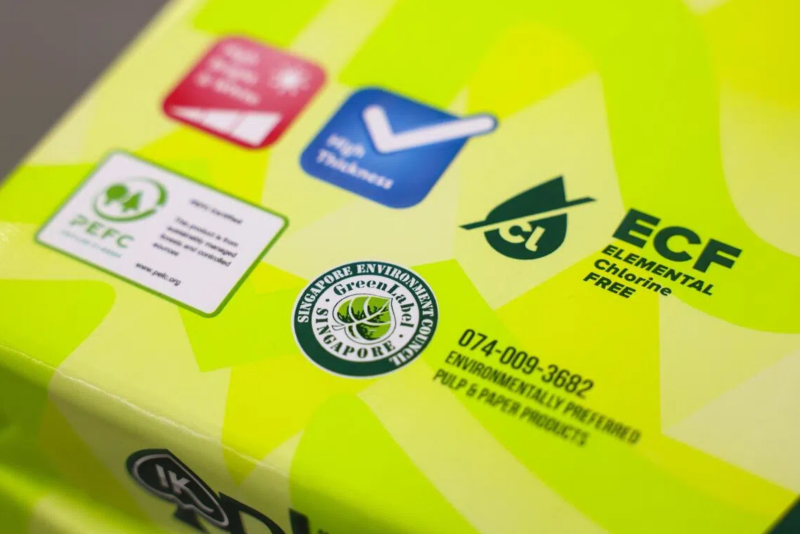
Consumers can put pressure on haze-linked firms by buying green-labelled products
While consumers can help combat transboundary haze by using green labels to boycott products linked to deforestation and fires, experts emphasise that addressing the crisis requires a broader, top-down response across the entire supply chain and regulatory environment. Associate Professor Zhang Weina (Department of Finance), Deputy Director of SGFIN, emphasised the need for stronger government intervention, calling for greater enforcement of existing regulations, appropriate penalties for Singapore-based companies found responsible, and greater transparency regarding companies participating in haze-generating activities.

Looking beyond the headlines on environmental risks
Is a reassuring ESG rating enough to show that a company is managing its environmental risks?
In a Business Times commentary, Professor Johan Sulaeman, Director of SGFIN, argues that banks and investors need credible evidence of how companies use and affect natural resources. Drawing on research published in PNAS, he highlights that widely used ESG ratings do not consistently capture companies’ actual exposure to deforestation. He also points to the limits of headline water-efficiency figures in assessing the impact of data centres on local water supplies. His message to financiers: seek reliable evidence, continue monitoring after capital is committed, and make environmental performance consequential for lending and investment decisions.

Turning Decarbonisation Plans into Action
Rising energy costs are leading many ASEAN businesses to delay decarbonisation. In The Straits Times, Professor Johan Sulaeman, Director of SGFIN, explains why the next phase may be more challenging: companies may have already captured the easier gains from energy efficiency and emissions reduction. He calls for structural solutions, including more renewable energy, stronger grid infrastructure and regional connectivity, and access to clean energy at commercially viable prices. He also emphasises that the transition must extend beyond energy to improve how businesses use land, water and other natural resources while supporting economic growth and resilience.
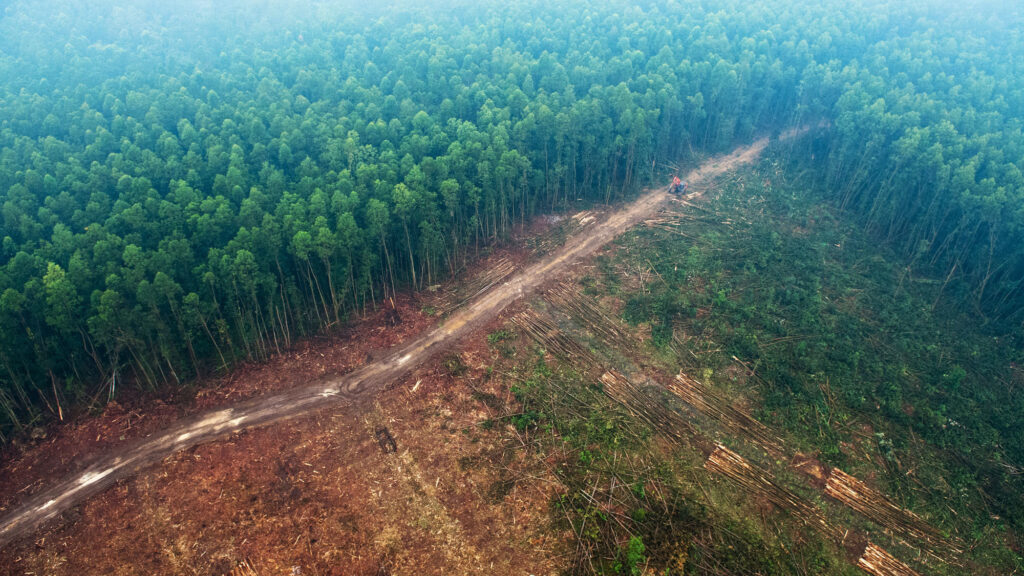
Do corporate ESG ratings accurately reflect companies’ exposure to deforestation?
ESG ratings are intended to help investors identify companies managing environmental risks. Yet new SGFIN research published in PNAS finds that these assessments may not consistently reflect companies’ actual exposure to deforestation. Analysing corporate assets and supply-chain links to forest-risk commodities, the study shows that ratings respond more strongly to media coverage than to independently measured geospatial exposure. The findings underscore the need for sustainability assessments to incorporate direct evidence of environmental outcomes. Satellite data, ground-validated measures and supply-chain information could help strengthen ESG frameworks, enabling financial institutions to better identify nature-related risks and support credible sustainable investment decisions.

Singlife-SGFIN white paper identifies ownership as strongest driver of sustainable action in Singapore
While awareness of sustainability is high among Singaporeans, the strongest driver of sustainable action is whether individuals feel a sense of personal ownership and believe their actions can make a difference. This is according to “Closing the Sustainability Action Gap: Insights from the Singlife-SGFIN Sustainable Future Index 2026” (SFI 2026) white paper launched today by leading homegrown financial services company Singlife and the Sustainable and Green Finance Institute (SGFIN) at the National University of Singapore (NUS). The study found that ownership accounts for 74 per cent of sustainability action, compared with 18 per cent for awareness and 8 per cent for knowledge. This suggests that fostering a stronger sense of personal ownership is likely to have a bigger impact on encouraging sustainable behaviour than awareness-building efforts alone.
Eco-Business article | ESG Business article | Insurance Asia article

Choosing Startup Investors: Does Gender Matter?
Building a more inclusive financial system requires understanding not only who receives capital, but also who gets the opportunity to provide it.
In this study, Johan Sulaeman (Director, SGFIN) and his co-authors examine whether startups respond differently to male and female investors. Using a large-scale randomized field experiment involving more than 40,000 U.S. startups, the authors send otherwise identical investment outreach from fictitious male and female investors.
The results reveal substantial gender differences at the very first stage of investor–startup matching. Startups are 23% more likely to open an email from a male investor and 27% more likely to visit his website than those of an otherwise identical female investor. The gender gap is particularly pronounced for angel investors, and professional credentials – which increase engagement for male investors – can actually reduce engagement with female investors.
The findings highlight an important dimension of inclusive and sustainable finance: gender-based frictions can affect not only entrepreneurs’ access to capital, but also investors’ access to investment opportunities and deal flow.

Household Sustainability
Sustainability is no longer shaped only by governments, businesses and financial institutions. It is also influenced by the everyday choices of households. This publication offers a timely perspective on how household decisions can contribute to a greener, fairer and more prosperous future. By connecting sustainability with household behaviour, financial decision-making and broader societal outcomes, it highlights an often-overlooked dimension of the sustainability transition. The work provides valuable insights for researchers, policymakers and practitioners seeking to understand how individual choices can collectively drive meaningful change. It reinforces the importance of placing people and households at the heart of the sustainability agenda.
SGFIN LinkedIn | World Scientific – Household Sustainability

Not at Odds: Why AI and Sustainability Go Hand in Hand
In an interview with CNA, Professor Sumit Agarwal, Managing Director of SGFIN, expressed his opinion that AI and sustainability are symbiotically aligned, not contradictory. He argued that AI can help advance the sustainability agenda, while sustainability principles should shape how AI is developed and deployed. On broader strategy, he supported Temasek’s rising AI investment given its general-purpose, cross-industry transferability, despite execution risks from high valuations. On sustainability, he stressed that success lies in whether capital accelerates the shift to a low-carbon economy, not just falling portfolio emissions.

China’s graduation from World Bank lending: a milestone for development finance
On CNA938 Rewind, Professor Johan Sulaeman, Director of the Sustainable and Green Finance Institute at NUS, discussed the World Bank’s decision to phase out lending to China by 2031. He observed that the decision is partly technical but also symbolic, as China is now treated as a facilitator and supporter of the Bank. The phase-out reflects a reprioritisation of lending towards the poorest economies, yet this does not mean retreating from climate adaptation: physical climate risks continue to rise and fall disproportionately on poorer countries, so development finance and climate resilience remain deeply connected.

AI is not Just Software – It is Heavy Industry
In The Business Times, Professor Johan Sulaeman, Director of the Sustainable and Green Finance Institute at NUS, examines the investor bargain behind SpaceX’s listing and the wider Musk ecosystem, including xAI’s rapid AI buildout. AI data centres require vast electricity, water, land and cooling infrastructure. Yet investors buying into founder-controlled structures may have limited power to influence how these environmental risks are managed. This highlights a core challenge in sustainable finance: the AI economy’s physical footprint must be measured, governed and priced.

As transition finance evolves, one issue warrants deeper scrutiny: captive coal
In The Business Times (16 June 2026), Professor Johan Sulaeman, Director of the Sustainable and Green Finance Institute at NUS, underscores how banks can better manage indirect exposure to coal in sectors producing transition-critical minerals. Coal-powered industrial operations face rising decarbonisation pressures, from trade measures to shifting buyer expectations. Rather than blanket exclusions, a more calibrated approach is needed: credible transition pathways, declining emissions-intensity thresholds, and enhanced disclosure. This highlights a core tension in sustainable finance, supporting essential low-carbon materials while avoiding carbon lock-in.
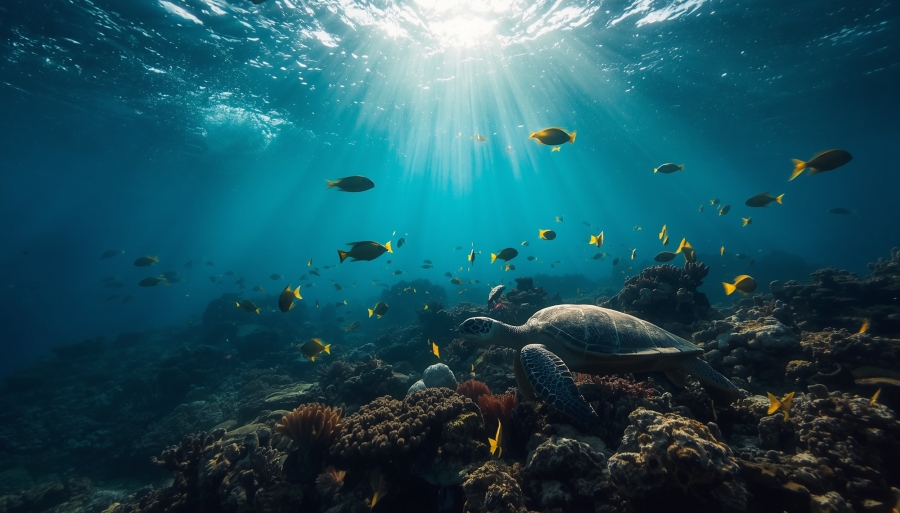
Indonesia’s Blue Bonds: Diving into New Waters
Sovereign blue bonds are often framed as innovation, but the challenge lies in how they are structured and brought to market. This teaching case examines Indonesia’s blue bond issuance through the lens of market entry, instrument design, and alignment with broader financing strategies. Set against rising ocean-related risks and growing investor focus on sustainable finance, the case highlights how design choices interact with debt management and fiscal frameworks. It offers a practical lens for understanding how sovereign decisions translate into market signals, with implications for pricing, risk assessment, and credibility. The case supports discussion on the trade-offs underlying sustainable sovereign financing.