


and Environmental Impact


SUSTAINABLE AND GREEN FINANCE


About Us
The Sustainable and Green Finance Institute (SGFIN) is a research institute established by the National University of Singapore (NUS). SGFIN provides deep research capabilities in sustainable and green finance with the focal point on Asia and contributes thought leadership to shape sustainability outcomes in policymaking across the financial sector and the economy at large.
Supported by exceptional domain experts across NUS, SGFIN equips businesses with critical knowledge across disciplines to better quantify the environmental and social impacts of their business developments, operations, products, and services. SGFIN also provides education, training, and toolkits to integrate sustainability dynamics into their business strategies and investment decisions. In essence, SGFIN facilitates companies and institutions in embedding sustainability as a core pillar in their business decisions.




Recent News & Publications
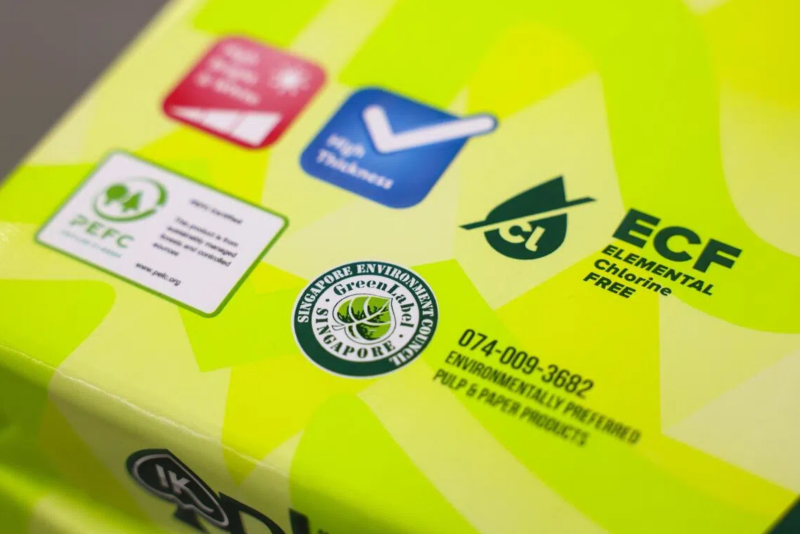
Consumers can put pressure on haze-linked firms by buying green-labelled products
While consumers can help combat transboundary haze by using green labels to boycott products linked to deforestation and fires, experts emphasise that addressing the crisis requires a broader, top-down response across the entire supply chain and regulatory environment. Associate Professor Zhang Weina (Department of Finance), Deputy Director of SGFIN, emphasised the need for stronger government intervention, calling for greater enforcement of existing regulations, appropriate penalties for Singapore-based companies found responsible, and greater transparency regarding companies participating in haze-generating activities.

Looking beyond the headlines on environmental risks
Is a reassuring ESG rating enough to show that a company is managing its environmental risks?
In a Business Times commentary, Professor Johan Sulaeman, Director of SGFIN, argues that banks and investors need credible evidence of how companies use and affect natural resources. Drawing on research published in PNAS, he highlights that widely used ESG ratings do not consistently capture companies’ actual exposure to deforestation. He also points to the limits of headline water-efficiency figures in assessing the impact of data centres on local water supplies. His message to financiers: seek reliable evidence, continue monitoring after capital is committed, and make environmental performance consequential for lending and investment decisions.

US Economic Recovery after Hurricanes
Agarwal, S., Choudhury, S. P., Fan, M., Klapper, L. (2026). Real-time economic disruption and recovery from Atlantic hurricanes across the US. Nature Communications. https://doi.org/10.1038/s41467-026-78686-4
Climate projections indicate substantial increases in hurricane activity under continued warming, yet how local economies adjust to hurricanes in real time remains poorly understood. Using daily transaction data from 7,987 US ZIP codes exposed to 21 Atlantic hurricanes between 2017 and 2024, we examine aggregate merchant sales and consumer spending to quantify disruption and test for substitution across locations and channels. Hurricanes cause losses equivalent to about two days of typical sales, with limited offsetting substitution and recovery to pre-hurricane levels within ten days. Economic disruption increases with physical damage, evacuation restrictions, and infrastructure outages, while storm category alone is a poor predictor of short-run economic impacts. Disruption and recovery patterns also vary across industries, merchant types, and sales channels. These findings provide real-time evidence on how local economies adjust to hurricanes and help identify the conditions under which short-run economic disruption is most severe.
Related research news article: Hurricanes Cost Local Economies Two Days of Sales but Recover Within Ten Days

Turning Decarbonisation Plans into Action
Rising energy costs are leading many ASEAN businesses to delay decarbonisation. In The Straits Times, Professor Johan Sulaeman, Director of SGFIN, explains why the next phase may be more challenging: companies may have already captured the easier gains from energy efficiency and emissions reduction. He calls for structural solutions, including more renewable energy, stronger grid infrastructure and regional connectivity, and access to clean energy at commercially viable prices. He also emphasises that the transition must extend beyond energy to improve how businesses use land, water and other natural resources while supporting economic growth and resilience.

Same-Race Voting Preferences in Director Elections
J. Sulaeman, and Q. Ye. (2026) Who Do You Vote For? Same-Race Voting Preferences in Director Elections. European Corporate Governance Institute – Finance Working Paper No. 872/2023, Review of Finance, accepted. https://dx.doi.org/10.2139/ssrn.4333509
This paper highlights racial and ethnic preferences in corporate director elections. Using a comprehensive dataset of mutual fund voting records, we discover that mutual fund managers are more likely to vote for director nominees who share their racial or ethnic identity. Funds managed by White-dominated teams exhibit the strongest same-race preferences, particularly those in fund families with scarce minority representation. Same-race voting preferences have detrimental implications for the career outcomes of minority director candidates, and are associated with worse fund performance primarily when fund managers operate under weaker accountability. We investigate various potential mechanisms—including statistical discrimination, value maximization, conflicts of interest, social networks, and taste-based biases—and find that the evidence aligns most closely with a taste-based explanation for same-race preferential voting.
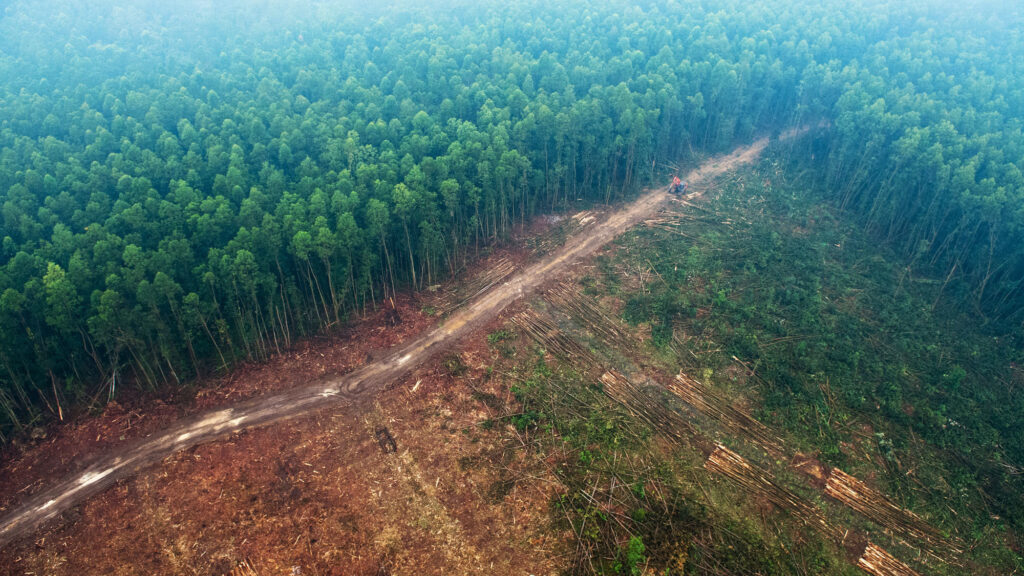
Do corporate ESG ratings accurately reflect companies’ exposure to deforestation?
ESG ratings are intended to help investors identify companies managing environmental risks. Yet new SGFIN research published in PNAS finds that these assessments may not consistently reflect companies’ actual exposure to deforestation. Analysing corporate assets and supply-chain links to forest-risk commodities, the study shows that ratings respond more strongly to media coverage than to independently measured geospatial exposure. The findings underscore the need for sustainability assessments to incorporate direct evidence of environmental outcomes. Satellite data, ground-validated measures and supply-chain information could help strengthen ESG frameworks, enabling financial institutions to better identify nature-related risks and support credible sustainable investment decisions.
ESG Ratings & Deforestation Exposure
Y. Zhu, J. Sulaeman, & L.R. Carrasco. (2026). Corporate ESG assessments fail to capture actual deforestation exposure. Proc. Natl. Acad. Sci. U.S.A. 123 (38) e2526924123. https://doi.org/10.1073/pnas.2526924123
Deforestation is a fundamental upstream risk to global sustainability, affecting all three pillars of credible Environmental, Social, and Governance (ESG) assessments, which are crucial sources of information facilitating sustainable investment decisions. However, the efficacy of major commercial ESG assessment tools in capturing corporate deforestation exposure remains unknown. We examine the relationship between corporate ESG ratings from five major ESG rating providers and two geospatially driven measures of company-level deforestation: forest loss surrounding corporate assets across sectors globally and supply-chain exposure to six forest-risk commodities in four tropical countries. Although deforestation is featured prominently in ESG methodologies, we fail to find evidence that ESG scores consistently penalize companies for deforestation. Conversely, ESG ratings respond more to media-based signals than to geospatially quantified deforestation. ESG analyses present apparent biases. Companies with deforestation exposure through soy, pork, and chicken supply chains receive higher ESG scores, whereas palm oil producers are more consistently penalized for deforestation exposure. Future integration of geospatial, ground-validated deforestation data and supply chain information into ESG assessment frameworks is essential for ESG-driven sustainable investing to effectively contribute to curbing deforestation.

Singlife-SGFIN white paper identifies ownership as strongest driver of sustainable action in Singapore
While awareness of sustainability is high among Singaporeans, the strongest driver of sustainable action is whether individuals feel a sense of personal ownership and believe their actions can make a difference. This is according to “Closing the Sustainability Action Gap: Insights from the Singlife-SGFIN Sustainable Future Index 2026” (SFI 2026) white paper launched today by leading homegrown financial services company Singlife and the Sustainable and Green Finance Institute (SGFIN) at the National University of Singapore (NUS). The study found that ownership accounts for 74 per cent of sustainability action, compared with 18 per cent for awareness and 8 per cent for knowledge. This suggests that fostering a stronger sense of personal ownership is likely to have a bigger impact on encouraging sustainable behaviour than awareness-building efforts alone.
Eco-Business article | ESG Business article | Insurance Asia article
Closing the Sustainability Action Gap: Insights from the Singlife-SGFIN Sustainable Future Index 2026
2026
The Singlife-SGFIN Sustainable Future Index (SFI) 2026 assesses sustainability motivation and action among 1,500 Singaporeans using the Awareness-Knowledge-Ownership-Action (AKOA) framework. The Index records an overall action score of 56 out of 100, revealing a gap between intention and everyday sustainable behaviour. Adoption varies across generations and sustainability areas, while Ownership, reflecting personal responsibility, values, perceived impact, and costs and benefits, emerges as the strongest driver of action.

Choosing Startup Investors: Does Gender Matter?
Building a more inclusive financial system requires understanding not only who receives capital, but also who gets the opportunity to provide it.
In this study, Johan Sulaeman (Director, SGFIN) and his co-authors examine whether startups respond differently to male and female investors. Using a large-scale randomized field experiment involving more than 40,000 U.S. startups, the authors send otherwise identical investment outreach from fictitious male and female investors.
The results reveal substantial gender differences at the very first stage of investor–startup matching. Startups are 23% more likely to open an email from a male investor and 27% more likely to visit his website than those of an otherwise identical female investor. The gender gap is particularly pronounced for angel investors, and professional credentials – which increase engagement for male investors – can actually reduce engagement with female investors.
The findings highlight an important dimension of inclusive and sustainable finance: gender-based frictions can affect not only entrepreneurs’ access to capital, but also investors’ access to investment opportunities and deal flow.
Research & Insights
Explore SGFIN's thought leadership, research publications, case studies and practical toolkits supporting sustainable finance and policy decision-making.
Upcoming Events

Sustainability Reporting and Governance
12 Nov 26 - 13 Nov 26
9:00 AM - 5:30 PM
Dr Sa-Pyung Sean Shin, Professor Mak Yuen Teen
Education Resource Centre, NUS

Sustainable Project Financing
16 Nov 26 - 17 Nov 26
9:00 AM - 5:30 PM
Associate Professor Ruth Tan, Associate Professor Zhang Weina
Education Resource Centre, NUS

Carbon Accounting for Enterprises
19 Nov 26 - 20 Nov 26
9:00 AM - 5:30 PM
Dr Sa-Pyung Sean Shin
Education Resource Centre, NUS

More events coming soon

ESG Shocks in Global Supply Chains
28 Oct 26
1:30 PM - 3:00 PM
Associate Professor Alminas Zaldokas [Dept of Finance, NUS]
NUS innovation 4.0 Seminar Room

Using Valuations of Environmental Resources in Policies
4 Nov 26
1:30 PM - 3:30 PM
Assistant Professor Tan-Soo Jie-Sheng [Institute for Environment and Sustainability]
NUS innovation 4.0 Seminar Room