
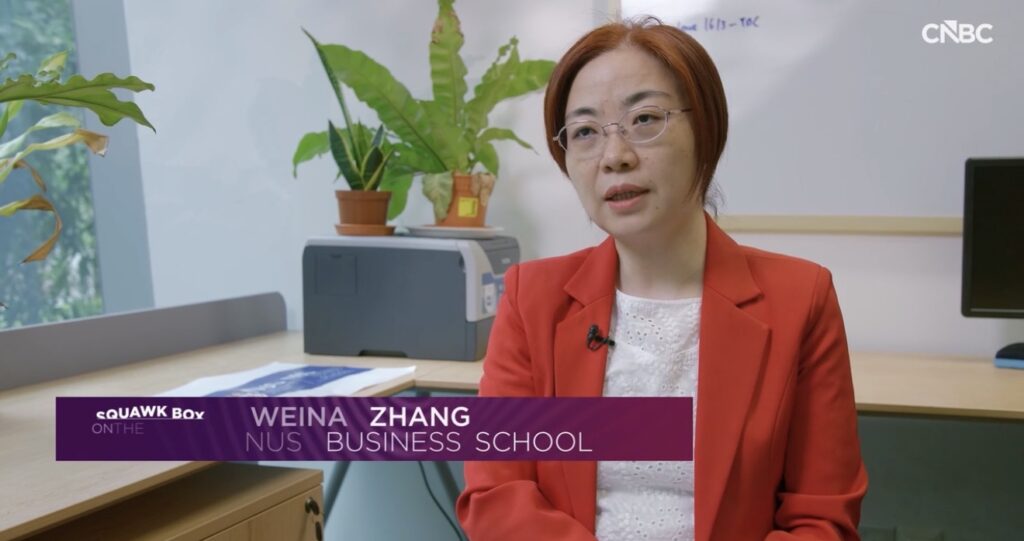
Why airlines are paying more for cleaner fuel — and who foots the bill
Associate Professor Zhang Weina (Department of Finance, Deputy Director of SGFIN) shared her insights in this interview by CNBC on sustainable aviation fuel (SAF). She explained that while SAF mandates set demand and SAF levies focus on costs. She noted that the mandates will push up the SAF prices in the short run due to the limited supply of SAF. The mandates alone are insufficient to boost supply. Greater policy support, such as de-risking projects and tax incentives, is needed to attract producers and expand capacity. Over time, increased supply could help ease price pressures.
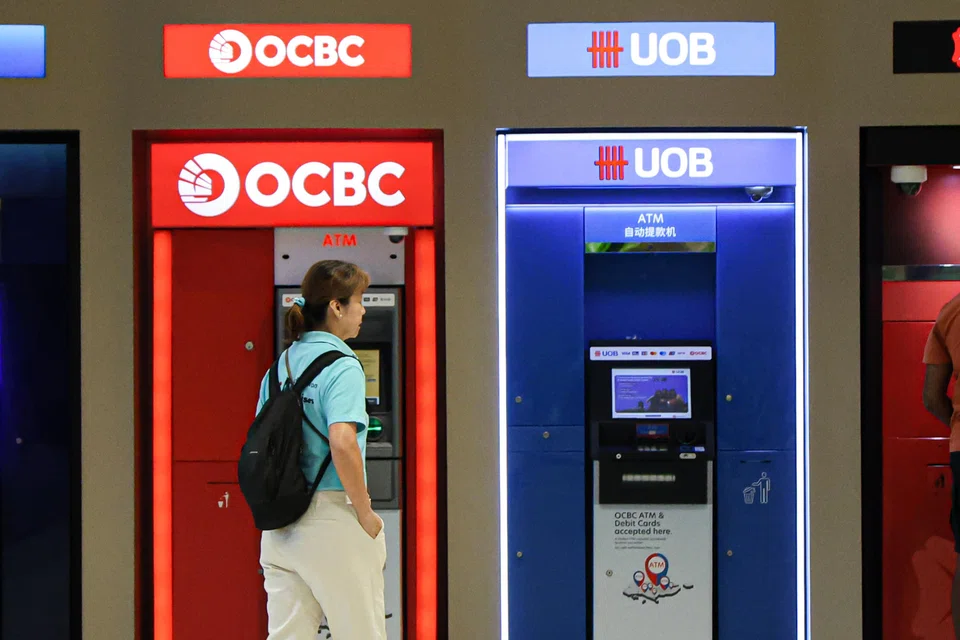
Climate risk is increasingly a cross-border financial risk
Research presented at the SGFIN Summit 2026 and recently featured in The Business Times highlights how banks operating in Indonesia, including Singapore banks and other regional banks, could face a higher loss intensity from climate-related exposures in Indonesian loan portfolios, particularly in fossil-intensive sectors. The findings underscore the growing importance of granular data and forward-looking risk assessment in managing cross-border climate exposures. As financial systems in Southeast Asia become increasingly interconnected, strengthening climate risk analytics will be critical for safeguarding financial stability and supporting more resilient and sustainable capital allocation.
SGFIN Whitepaper | BT Article | SGFIN LinkedIn | Summit Panel 1 LinkedIn

Markets are Pricing Climate Risk
Indonesia’s recent US$80B market volatility is a wake‑up call: climate and nature risks are now financial risks. As highlighted in Professor Johan Sulaeman’s new Op‑Ed, “Market volatility highlights Indonesia’s overlooked climate and resource risks”, SGFIN research shows that physical climate hazards and fossil‑intensive exposures can sharply amplify credit losses, making environmental resilience a core pillar of financial stability. Recent developments in Indonesia’s resource sector further reveal how environmental governance shapes investor confidence. The path forward is clear: embed climate and natural‑capital risks into supervision, disclosure, and investment to build stronger, more resilient markets in Indonesia and beyond.

From Cautious Capital Deployment to Real Transition Impact
In recent discussions, Prof Johan Sulaeman, Director of the Sustainable and Green Finance Institute highlighted that Danantara’s cautious deployment reflects prudent sovereign investing and governance discipline. Yet scale alone does not guarantee transition impact. With a large fraction of Indonesia’s emissions footprint remains within existing state-owned enterprise portfolios, progress depends on clear portfolio-level targets, time-bound coal phase-down plans, and capital shifts toward renewables, storage, and grid infrastructure. The real test is whether sovereign capital can mobilise additional private investment into projects that would otherwise not proceed. Potential is evident. But implementation, transparency, and measurable outcomes will determine credibility.
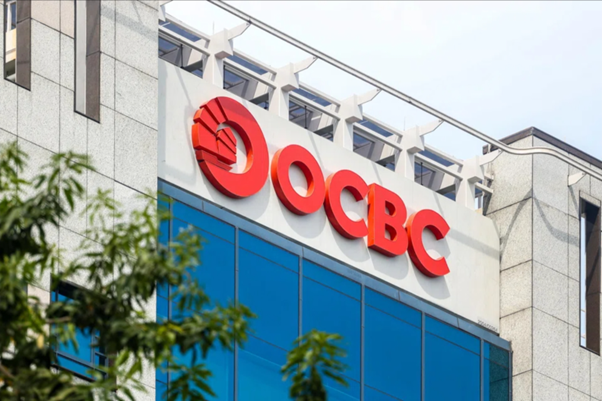
Beyond Labels: Why Carbon Risk Disclosure Must Reflect Economic Reality
Recent developments involving OCBC highlight a critical issue in sustainable finance: the difference between formal sector classification and real economic exposure to transition risk. Prof Johan Sulaeman, Director of the Sustainable and Green Finance Institute underscores that climate disclosure should capture where carbon risk truly resides within portfolios. Transition risk is not confined to fossil fuel labels; markets ultimately price economic exposure, policy shifts and capital repricing. Decision-useful disclosure must go beyond taxonomy alignment.

Singlife-SGFIN Sustainable Future Index 2026
The Singlife–SGFIN Sustainable Future Index 2026, jointly developed by Singlife and Sustainable and Green Finance Institute (SGFIN), examines the intrinsic drivers shaping sustainability behaviours among Singaporeans. The SGFIN team comprise of Deputy Director Prof Weina Zhang, Michael Aleander, Bhairavee Deepak Wagh, and Asda J Pandiangan, have developed the survey questions based on behavioural framework encompassing awareness, knowledge, and ownership, and compute the index. Such approach aims to identify the gaps between sustainability intentions and actions and propose possible solutions going forward.
Singlife Press Release | Singlife Report | SGFIN Sustainable Finance Case Competition 2026 | Asia Insurance Review article | Singapore Business Review article | ESG Business article | Newsflash Asia article

Counting Carbon in MICE
Associate Professor Zhang Weina (Department of Finance) explained how large-scale MICE events generate carbon emissions across areas such as travel, catering and booth construction. Using SGFIN’s carbon calculator, she demonstrated how emissions can accumulate, underscoring the importance of measuring carbon impact as a first step towards more responsible event planning. Similar posts were shared on Facebook and TikTok.

Scaling SME Sustainability Through Non-Financial Innovation
As part of its mission to advance sustainable finance and support SME transition around the world, SGFIN contributed a case study to the “SME Best Practice Guide” published by International Finance Corporation (IFC) SME Finance Forum to share the insights on how non-financial services can unlock sustainable finance for SMEs. SGFIN’s Deputy Director, Associate Professor Zhang Weina, together with Research Associate Allan Loi, presented a Singapore-based ESG data solutions provider – ESGpedia. The case exemplified how non-financial service providers—through access to sustainability advisory, ESG data infrastructure, reporting tools, and capability development—embedded in a data-driven, partnership-led ecosystem, has enabled over 1,000 SMEs enhanced access to sustainable finance, increased competitiveness, and embedded decarbonisation strategies across regional supply chains.

Digital Convenience, Real Carbon Costs
Associate Professor Zhang Weina (Department of Finance) highlighted the three platforms with the highest carbon footprints are Netflix, Zoom and TikTok, due to high-resolution video streaming and cloud data storage. She also noted that activities such as conferences, workshops and seminars can generate substantial carbon emissions. See similar posts on Facebook and TikTok.

Sustainable Aviation Fuel Levy Explained
Associate Professor Zhang Weina, Deputy Director of SGFIN commented that the sustainable aviation fuel (SAF) levy on outbound cargo will likely be passed on to end customers. This may negatively impact the price competitiveness of Singapore’s exports. However, as transit and inbound cargo will be exempt from this levy, the impact on companies using Singapore as a transit logistics hub will be minimal. She added that the efficiency and reliability of the Singapore’s airports far outweigh the cost of the levy. The SAF levy is necessary and crucial to building a low-carbon aviation ecosystem in the long term.

Finance as a Catalyst for a Sustainable Future
In a compelling episode of the AIB Podcast, Professor Johan Sulaeman, Director of SGFIN, shared how green finance is reshaping the future of capital allocation. Moving beyond traditional profit-driven models, green finance is emerging as a strategic lever to drive long-term environmental and social value. Prof Johan highlighted the urgent need for clearer impact metrics, inclusive transition frameworks, and cross-sector collaboration to unlock scalable climate solutions. This timely conversation offers deep insights into innovation, climate finance, and the path to COP30, reinforcing SGFIN’s commitment to advancing financial practices that deliver lasting value for investors, society, and the planet.

Shaping Asia’s Net-Zero Future
With the closure of the Net-Zero Banking Alliance, Prof Johan Sulaeman, Director of SGFIN, highlighted a pivotal moment for Asian banks and regulators. He emphasized that transparency, consistent climate disclosures, and stronger accountability are essential to maintain credible net-zero commitments. While the absence of a global oversight body creates challenges, it also presents a rare opportunity: banks can take direct ownership of their decarbonisation journeys, aligning strategies with regional and sectoral realities. Prof Johan called on regulators and industry groups to provide guidance and frameworks that ensure progress remains measurable, transparent, and impactful.