SGFIN Sustainability Summit 2026 Recap
A community convened around sustainable finance research
On 12th March 2026, the SGFIN Sustainability Summit 2026 brought the sustainable finance community together in Singapore for a programme built around three new pieces of research from the Sustainable and Green Finance Institute at NUS. The thread running through the day was straightforward yet consequential. Climate risk does not respect national borders, and when climate risk travels across borders, financial risk follows.
The Summit examined climate risk and its financial translation, the disclosure bottleneck holding back corporate action on nature and biodiversity, and how small and medium-sized enterprises (SMEs) can value the environmental outcomes of their decisions. Each research strand was paired with a panel of practitioners, giving bankers, regulators, corporate leads, and policy makers a direct line from SGFIN’s published work to the questions they face in practice.
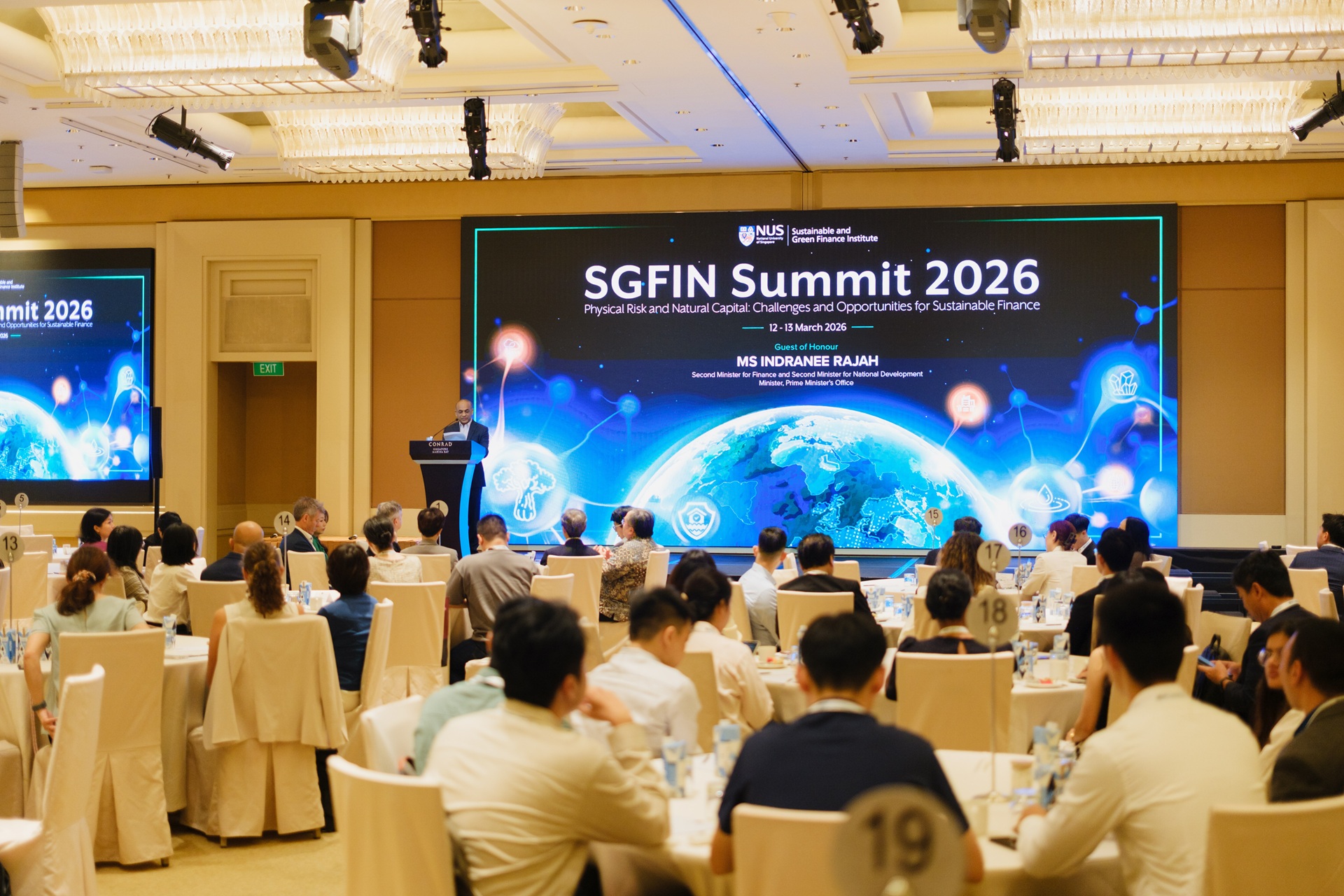
Setting the agenda: Climate risk and financial stability
Ahead of the Summit, SGFIN released a whitepaper on climate risk that framed the discussions to follow. The publication, which received coverage by The Business Times, brought attention to the growing linkages between climate risk and financial system stability, and to the increasingly cross-border character of both. Climate-related risks, whether physical or transition-driven, increasingly transmit across jurisdictions and sectors. These risks came with direct implications for how financial institutions assess exposure, price risk, and allocate capital.
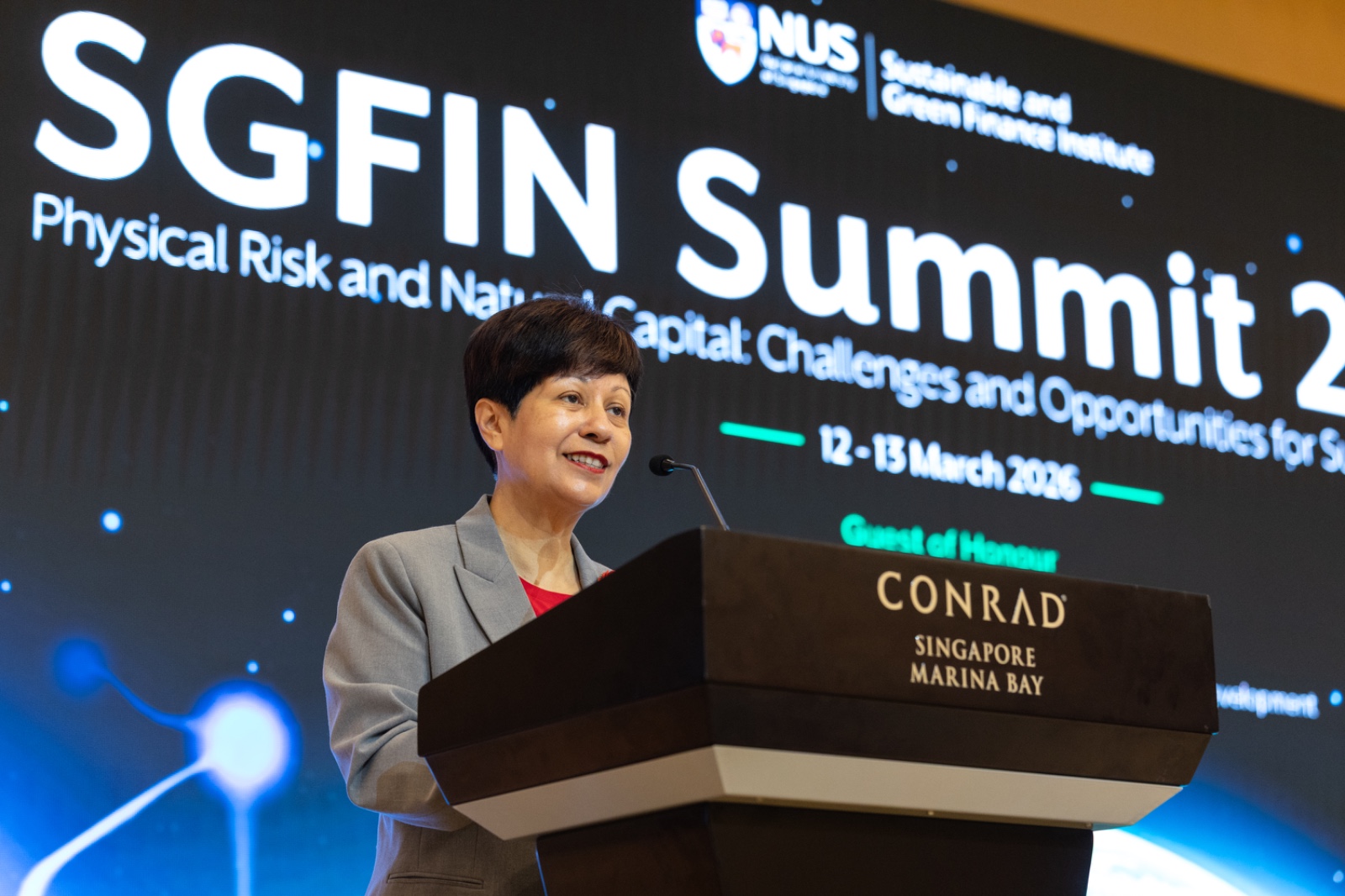
Opening Address by Guest of Honour Ms Indranee Rajah
The Opening Address was delivered by Ms Indranee Rajah, Second Minister for Finance and Second Minister for National Development, and Minister in the Prime Minister’s Office. Her remarks placed Singapore’s approach to climate finance in the wider regional picture and spoke to the role that research institutes like SGFIN can play in building the analytical foundations needed for credible transition planning.
Singapore imports more than 90% of its food, leaving it vulnerable to climate-driven supply-chain shocks. Its natural capital, which has long moderated urban temperatures and supported flood management, is now under stress from accelerating climate change. She emphasised that these pressures are not isolated but have broader implications for Singapore’s economy and resilience.
Minister Rajah also noted that climate risks are increasingly reflected in financial markets, where climate and nature related considerations are beginning to shape how risks are assessed and priced. Insurance premiums reflect flood risk, and lending rates are beginning to incorporate vulnerability assessments. The trajectory she described is one in which capital rewards climate resilience and penalises exposure, which raises the stakes for the analytical work that institutions like SGFIN needed to make those exposures visible and measurable.
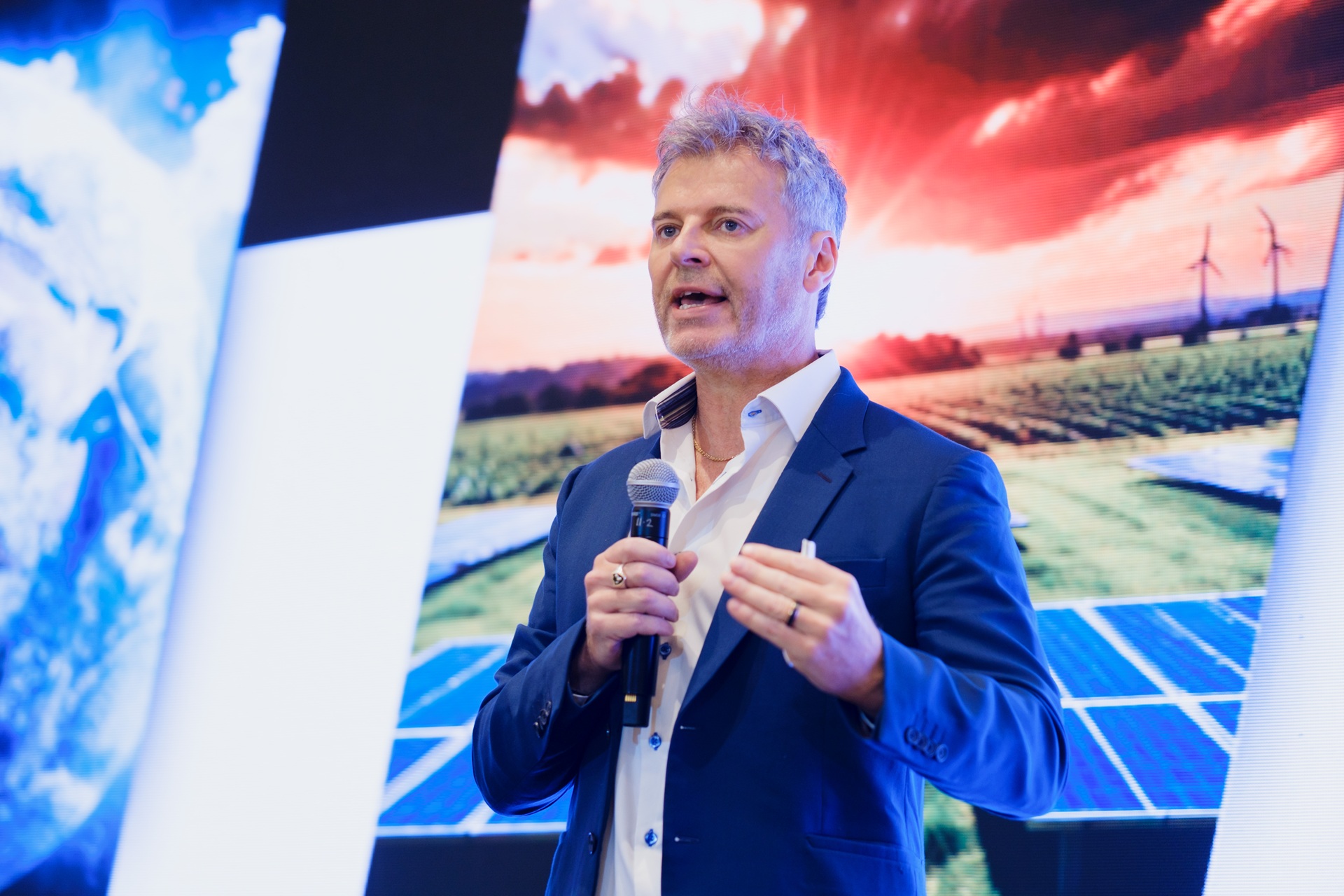
Keynote by Professor Benjamin Horton
Professor Benjamin Horton, Dean of the School of Energy and Environment at City University of Hong Kong, delivered the first keynote from the perspective of an earth-system scientist. The science he set out was uncomfortable. Paris Agreement temperature threshold have already been crossed. The resulting sea level and ocean trajectories pose risks to Asian coastal economies with significant implications for infrastructure and economic activity.
His central argument was that the language used to discuss climate risk does not always fully reflect the pace indicated by climate science. He argued that the shocks highlighted by climate science may not be gradual, pointing instead to the potential for more abrupt and disruptive change. While adaptation is often associated with incremental change, these dynamics underscore the importance for resilience, particularly the ability of systems to absorb and respond to shocks. He framed this as a pivotal moment, calling on academics, policymakers, and industry practitioners to rise to the challenge by investing in climate science and embedding climate scenario analysis into policy and financial decision-making.
Keynote by Professor Bambang Brodjonegoro
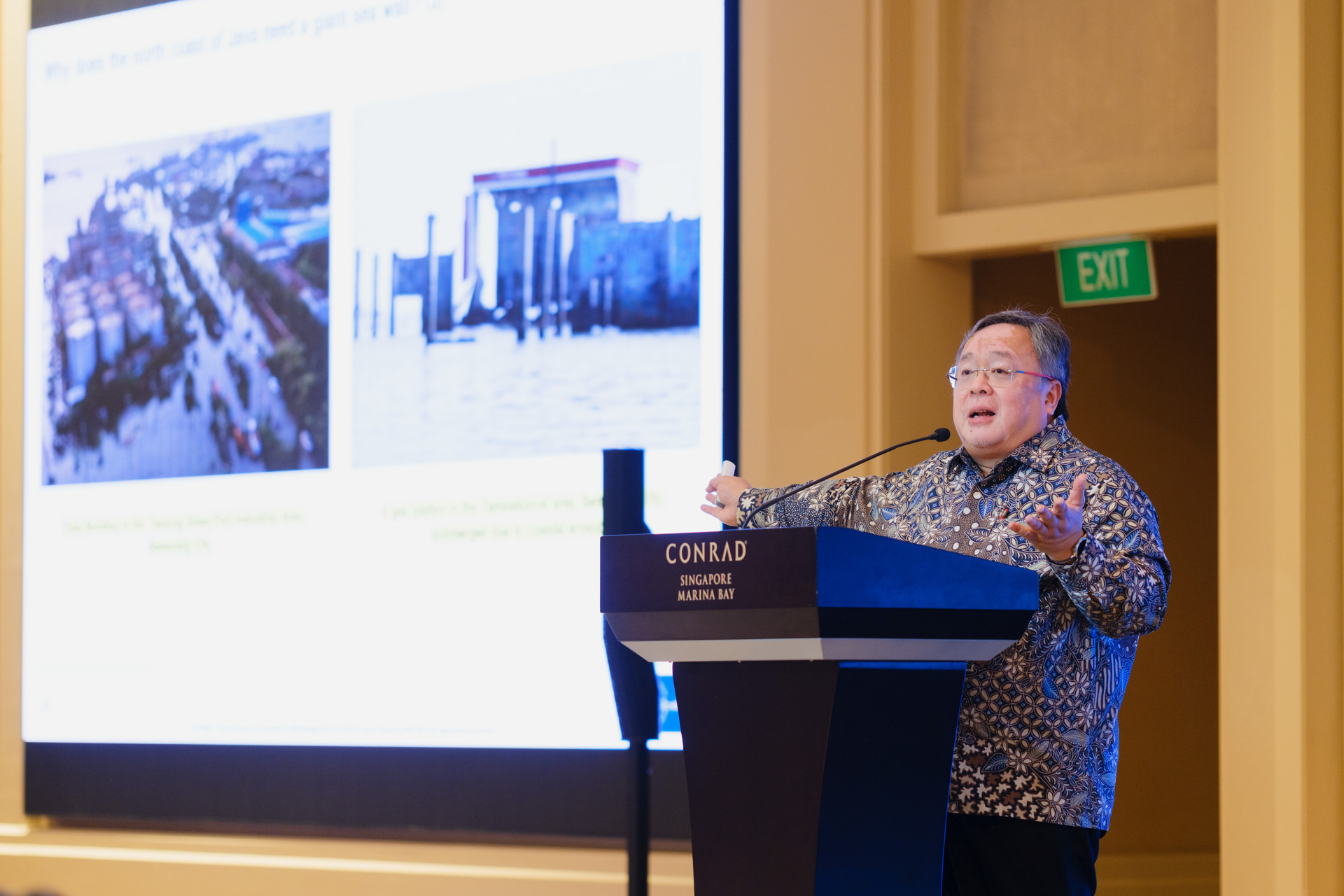
The second keynote was delivered by Professor Bambang Brodjonegoro, Dean and CEO of the Asian Development Bank Institute (ADBI), and formerly Indonesia’s Minister of Finance and Minister of National Development Planning. Drawing on ADBI's policy role across the Asia-Pacific and his own experience in public finance, his address widened the lens from the physical science of climate change to the institutional architecture the region will need to finance its transition. He framed sea-level rise and climate impact as first-order questions of budget and finance rather than environmental policy alone.
He pointed to a familiar tension. Many economies in the region face high climate risk and development needs, while capital markets are still catching up in pricing environmental and social outcomes. These pressures fall heavily on public finance, particularly in areas such as coastal protection, disaster response, and infrastructure resilience, making the efficiency of capital allocation a first-order concern.
From there he turned to the role of policy frameworks in shaping financial flows. Without clear signals, such as regulations, incentive, or disclosure requirement, capital will not move at the scale or speed required. This underscores the need for alignment between financial institutions, policymakers, and international frameworks.
SGFIN Insights and Panel: Climate physical risk assessment, mitigation, and adaptation
The first panel opened with an SGFIN presentation on climate risk stress testing, examining transition and physical risk in the Indonesian banking system. Using granular loan-level and physical risk data, the study analysed how energy transition dynamics and climate hazards could affect bank loan portfolios, with implications for financial stability and risk management. SGFIN's research addresses where current stress-testing practice remains underdeveloped, particularly in capturing non-linear physical risks and cross-border transmission, both of which have material consequences for how Asian financial institutions assess exposures.
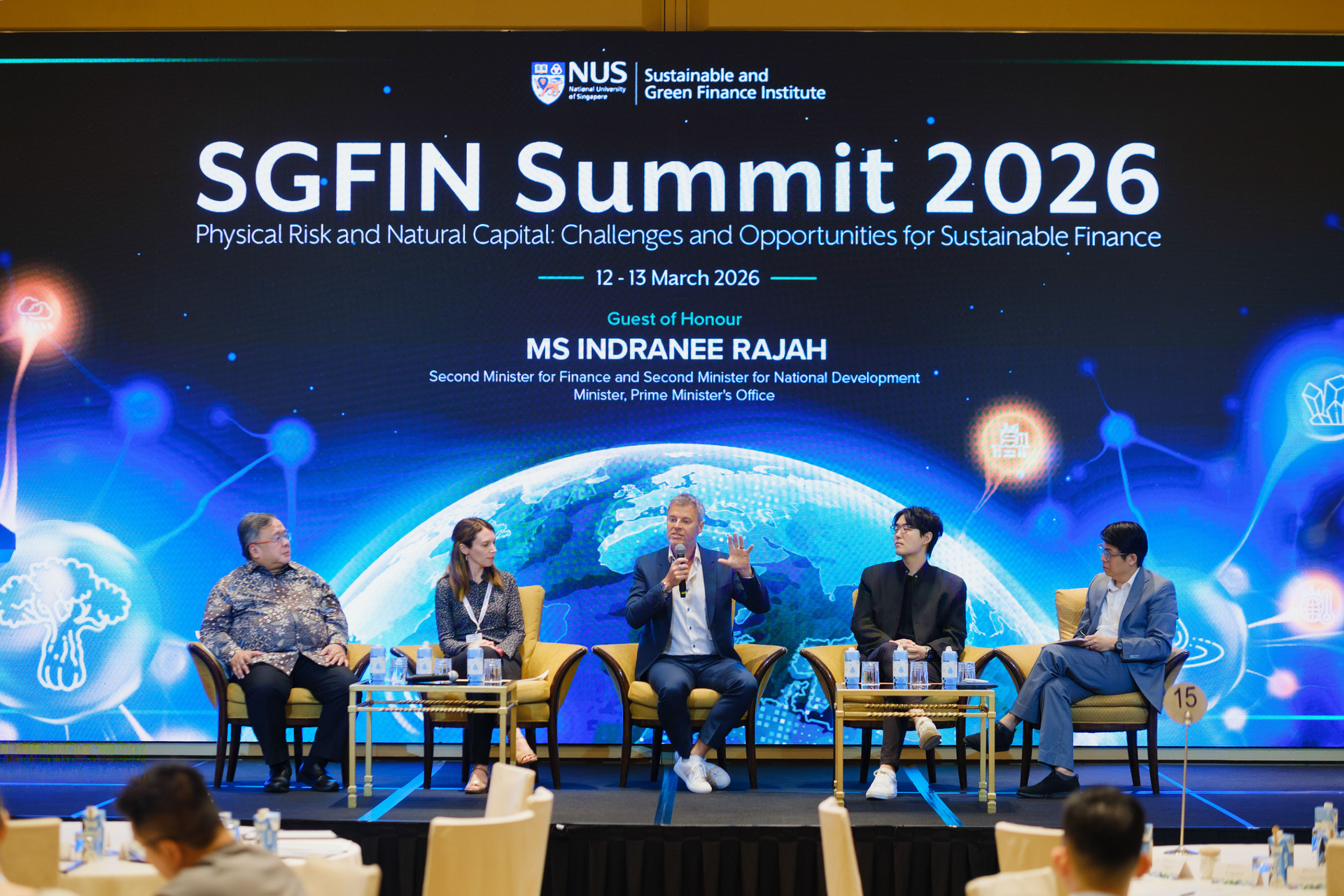
The paired panel, Climate Physical Risk Assessment, Mitigation and Adaptation, built on that foundation. The discussion was moderated by Professor Johan Sulaeman (SGFIN) and featured Professor Benjamin Horton (HKU), Professor Bambang Brodjonegoro (ADBI), Associate Professor Kimberly Fornace (NUS), and Dr Abraham Wu (AlphaGeo). The conversation widened the frame beyond the banking-system focus of the SGFIN research to consider multilateral finance, the mismatch between climate-model timescales and investor decision horizons, and the public-health dimensions of physical risk that financial frameworks rarely capture.
For the financial industry, the implication was direct. Stress testing is becoming an anchor for both prudential dialogue and internal capital planning. Institutions that invest early in defensible methodology will be better placed when supervisory expectations tighten.
SGFIN Insights and Panel: Nature and biodiversity impacts and dependencies
The second panel opened with an SGFIN presentation on the structural gap between global biodiversity policy and the corporate disclosure frameworks intended to implement it. Using large-scale document analysis and machine-learning text classification, SGFIN researchers conducted a systematic assessment of how major disclosure frameworks translate the Kunming-Montreal Global Biodiversity Framework into corporate reporting requirements. The research also traces a shift in reporting landscape from fragmentation toward consolidation, with the Taskforce on Nature-related Financial Disclosures (TNFD) emerging as the main global framework for and gaining support by the International Sustainability Standards Board (ISSB) sustainability standard ecosystem.
The disclosure gap was identified as a structural bottleneck in corporate action on nature-related risks. Compared to climate disclosures, biodiversity-related reporting remains fragmented, inconsistent, and often insufficient for decision-making. This gap limits how effectively capital can flow toward nature-positive outcomes.
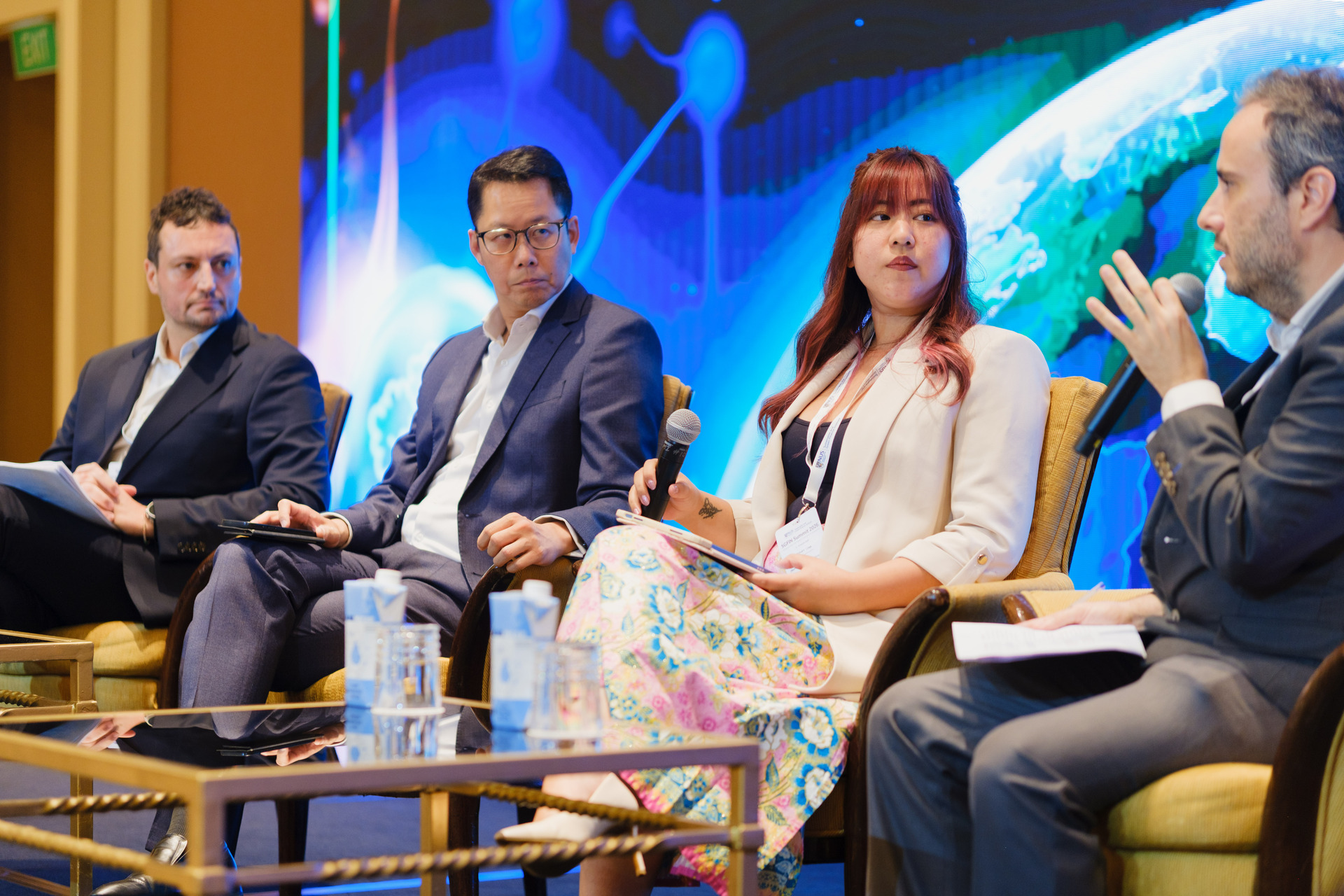
Built on that foundation, the next panel discussed about Nature and Biodiversity Impact and Dependencies. The panel was moderated by Associate Professor Roman Carrasco (NUS), with Ashley Chua (ERM), Eric Lim (UOB), and Matteo Marinelli (WWF). The discussion focused on where the binding constraints lie. The localised character of biodiversity risk and the difficulty of tracing nature dependencies across global supply chains make it challenging to translate technically complex biodiversity indicators into business decisions. The panel also underscored shared views that disclosure alone is not enough. Capital must flow towards practical nature-positive solutions, whether through landscape finance, blended finance, or public-private partnerships.
For practitioners, this signals that biodiversity risk is on the same trajectory as climate disclosure. As expectations rise and standards evolve, firms that invest early in building data, metrics, and internal capability will be better positioned as standards evolve.
SGFIN Insight and Panel: Sustainability impact valuation for SMEs
The third pairing shifted the scale of the discussion. While the earlier sessions examined climate and biodiversity risk at the level of banking systems and global disclosure frameworks, this session focused on the firms that sit at the base of those systems. In the presentation, SGFIN previewed forthcoming research on sustainability valuation for small and medium enterprises (SMEs).
In Singapore, SMEs account for nearly 99% business, around half of economic output, most of the workforce, and they are a meaningful source of emissions. Our research argues that gap is not ambition but the absence of tools that tell SME owners to assess whether sustainability actions translate into financial value. The SGFIN SME Sustainability toolkit is being developed to address this gap, combining conventional financial valuation with a second layer that puts a monetary value to environmental and social outcomes.
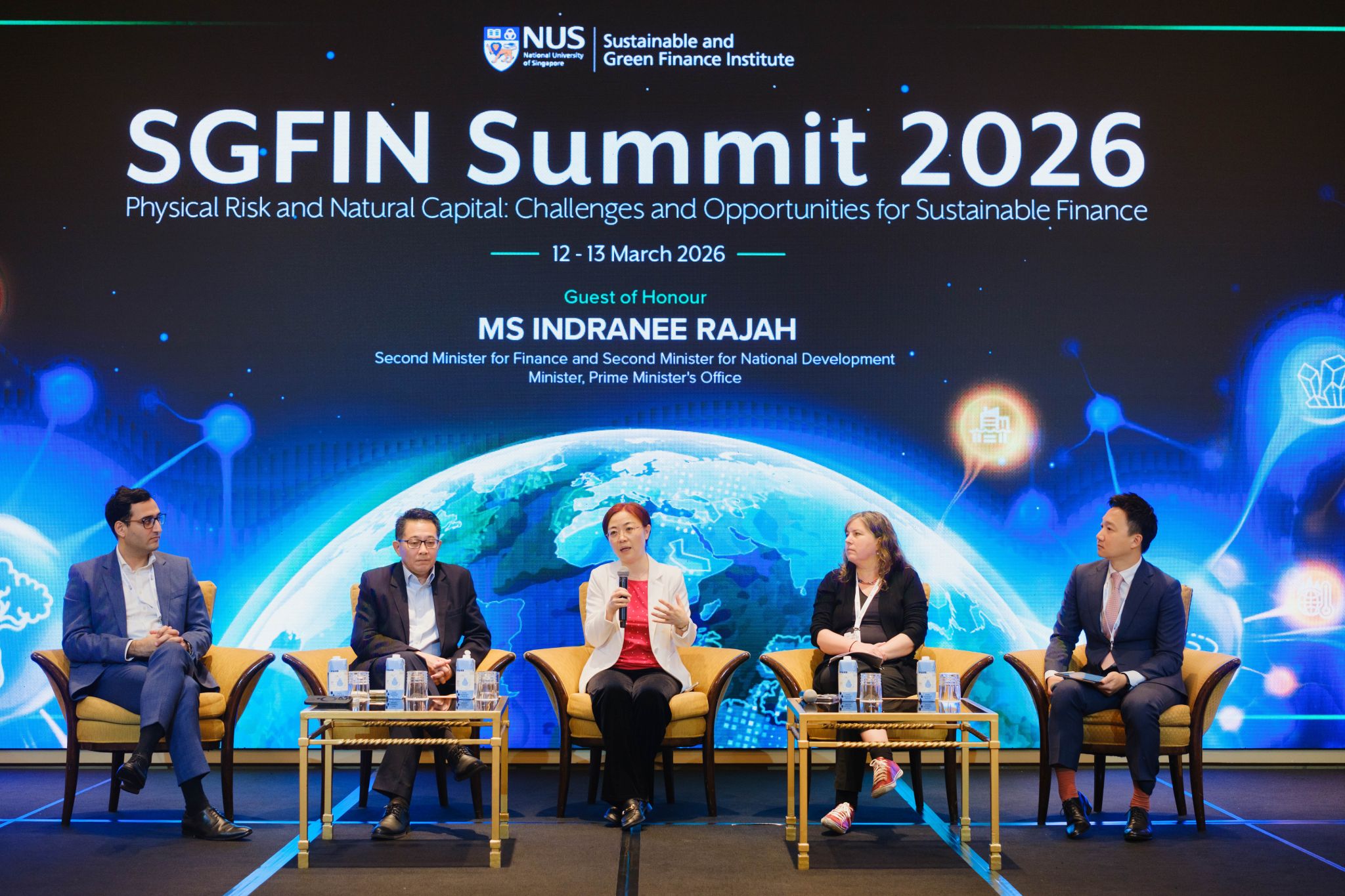
The paired panel, Are Sustainability Initiatives Cost or Value Drivers?, addressed the question directly. Moderated by Dr Sa-Pyung Sean Shin (NUS), it featured Franziska Zimmermann (Temasek), Sorouch Kheradmand (Schneider Electric), Derrick Tang (Uniseal), and Associate Professor Zhang Weina (SGFIN). The discussion focused on how sustainability can move beyond compliance and reporting to support long-term value creation and resilience. A key theme was the disconnection between how firms report past performance and how they assess future risks, particularly in areas such as climate exposure, regulatory shifts, and supply chain resilience.
Sustainability initiatives were framed not only as reporting obligations, but as operational levers. When linked to core operations, they can become practical levers for value creation through efficiency gains, risk reduction, and stronger stakeholder confidence.
For SMEs, the challenge is ensuring these efforts remain practical and clearly tied to business outcomes. This reinforces the importance of identifying what is materially relevant and integrating it into everyday decision-making. This also highlights the role of emerging tools, including the forthcoming from SGFIN, in helping make such integration more measurable in practice.
Reflections from the Summit
The SGFIN Sustainability Summit 2026 brought three strands of research into direct conversation with practitioners across finance, industry, and policy. Across climate physical risk, biodiversity, and valuation, a consistent pattern emerged. Financial systems are being asked to incorporate environmental risks and outcomes that are still imperfectly measured, inconsistently disclosed, and unevenly priced.
Advancing sustainable finance therefore requires more than frameworks and commitments. It depends on the development of analytical tools and data that allow institutions to translate these risks and impacts into financial terms and decision-making processes. The discussions demonstrated how research can be tested and refined through engagement with industry and policy stakeholders, strengthening both its relevance and practical application.
Taken together, the sessions illustrated how these elements can be brought into closer alignment, reinforcing SGFIN’s role as both a research centre and a convening platform that connects analytical work with real-world decision-making.
Looking ahead to 2027
SGFIN will continue to build on this approach in future convenings, with further work aimed at deepening the integration of research and practice across climate and environmental finance. As these issues become more central to financial decision-making, the need for grounded, decision-useful insights will only grow.
Follow our communications channels for updates or register your interest to be part of the SGFIN Sustainability Summit 2027.
Read More
In the news:
- The Straits Times - Economic risk of climate change increasingly relevant for S’pore, also creates opportunities: Indranee
- The Business Times - Singapore banks could see biggest losses on Indonesia loans among regional peers due to climate risks
- Green Central Banking - Mounting climate and physical risks threaten economic foundation, says Singapore minister
- Green Central Banking - Sea-level rise should be seen as budget and finance issue: former Indonesian minister
- NUSNews - Climate resilience needed to cope with immediate shocks, long-term changes
On social media:
- NUS LinkedIn: SGFIN Sustainability Summit 2026
- NUS Facebook: SGFIN Sustainability Summit 2026
- NUS X: SGFIN Sustainability Summit 2026
- Opening Address by Ms Indranee Rajah, Second Minister for Finance & Second Minister for National Development, Minister, Prime Minister's Office
- Keynote speech by Professor Benjamin Horton, Dean, School of Energy and Environment, City University of Hong Kong
- Keynote speech by Professor Bambang Brodjonegoro, Dean & CEO, Asian Development Bank Institute
- SGFIN Insight: Climate Risk Stress Testing
- Panel: Climate Physical Risk Assessment, Mitigation and Adaptation
- SGFIN Insight: Biodiversity Disclosure Gap: A Structural Bottleneck in Corporate Biodiversity Actions
- Panel: Nature and Biodiversity Impacts and Dependencies
- SGFIN Insight: Sustainability Impact Valuation Toolkit for SMEs
- Panel: Are Sustainability Initiatives Cost or Value Drivers?
Organised by:
