Pillar 6
Impact Measurement and Valuation

SGFIN develops tools to quantify and monetise sustainability impacts across climate, biodiversity and social inclusion, enabling stronger integration into investment and policy decisions. Using frameworks such as Integrated Return on Investment (IROI), this work supports firms and financiers in assessing the true value of sustainability outcomes across sectors, from SMEs to green buildings and energy transition, while improving transparency and capital allocation toward impactful projects.

SGFIN research on impact measurement and valuation advances rigorous methods for assessing environmental and social impacts of policies and investments. It develops frameworks to quantify climate, biodiversity and ecosystem benefits, employs economic valuation techniques, and advances standardised metrics and disclosure approaches that support transparent impact assessment, better decision-making and accountability in sustainable finance and policy contexts.

Mortgages, Subways & Automobiles

Agarwal, S., Chua, Y. H., Ghosh, P., Ghosh, S. K., & She, L. (2025). Mortgages, subways and automobiles. Journal of Public Economics, 252, Article 105522. https://doi.org/10.1016/j.jpubeco.2025.105522

We examine how sustainable infrastructure investments affect household financial outcomes by studying the impact of subway expansions on mortgage repayment behavior in Delhi, India. Using administrative data from one of India’s largest mortgage lenders, we find that households in postal codes with newly opened stations experience a 4.42% decline in mortgage delinquency rate and a 1.38% increase in prepayment rate. Evidence from vehicle registration records suggests that these improvements are driven by reduced automobile reliance, with vehicle spending falling by 6.52%. The effects are most pronounced among financially constrained households, who cut back on low-quality vehicle purchases and exhibit the greatest gains in repayment performance.

Consumption Carbon Footprint: Singapore Case Study

7

Flavia Badarinza | Johannine Enerio | Devansh Joshi | Johan Sulaeman | Sumit Agarwal

This whitepaper aims to provide an assessment of Singapore’s household consumption carbon footprint using the country-agnostic algorithm described in the SGFIN Whitepaper “Consumption Carbon Footprint: Country Level Data Framework”. It seeks to highlight carbon impacts across income groups and consumption categories while identifying pathways for footprint reduction and opportunities for carbon labelling and value-chain decarbonization.

Read the Paper

Just Transition Finance Challenges & Opportunities for the Early Retirement of Indonesia’s Coal-Fired Power Plants

Yuan, Y., Zhang, W., Aini, L.K., Budianto, K.F., Winayo, M.F., Jie, Y., Sulaeman, J., Lee, K.W.F., and J. Hamdani (2024). Just Transition Finance Challenges & Opportunities for the Early Retirement of Indonesia’s Coal-Fired Power Plants, SGFIN Industry Report #2, National University of Singapore. https://sgfin.nus.edu.sg/sgfin_industry_report-2/
Integrated Impact Valuation Framework for Green Buildings

4

Jefferson | Weina Zhang | Aaron Mueller | Chunyu Yang

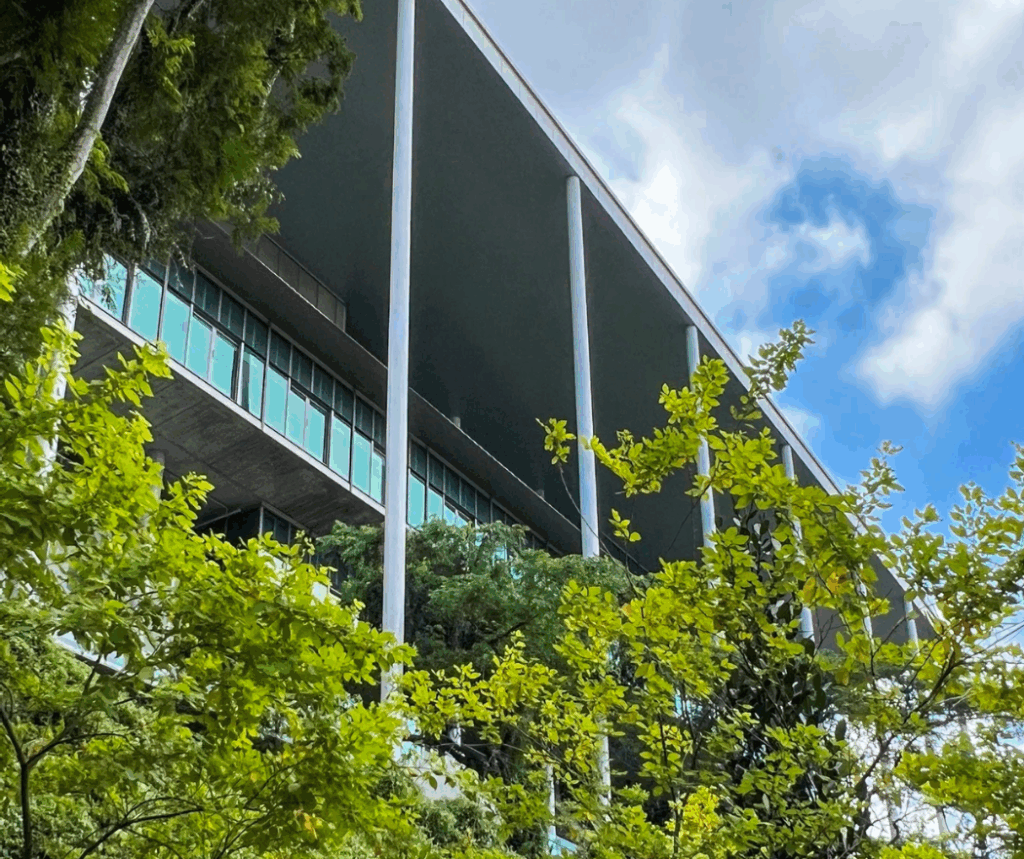
This whitepaper introduces SGFIN’s integrated impact valuation framework for green buildings: a comprehensive approach built on the harmonized impact indicators of 13 existing building certification standards and impact measurement frameworks. Our proposed framework integrates Economic, Environmental, Social, and Governance (EESG) impacts into a unified monetary assessment model, providing a better understanding of the impact values created by green buildings.
Read the Paper

Stock Market Fluctuations & Health

Agarwal, S., Chen, S., He, H., Huang, X., & Li, T. (2024). Associations between stock market fluctuations and stress-related emergency room visits in China, Natural Mental Health 2, 909-915.https://doi.org/10.1038/s44220-024-00267-5

Here we study the relationship between stock market fluctuations and emergency room visits in China. Using daily emergency room visit records from the three largest hospitals in Beijing from 1 January 2009 to 31 December 2012, we find that a one percentage point decrease in daily market returns (Growth Enterprises Index) is associated with 0.185 (P = 0.040, confidence interval (CI) = 0.009 to 0.361, or 0.7%) increased cases of cardiovascular diseases and 0.020 (P = 0.060, CI = 0 to −0.041, or 2.5%) increased cases of mental disorders on that day. Moreover, a one percentage point increase in daily market returns (Growth Enterprises Index) is associated with 0.035 (P = 0.007, CI = 0.010 to 0.059, or 3.3%) increase in cases of alcohol abuse on that day. The health effects are highly nonlinear, instantaneous and more salient for older people and males. By contrast, diseases that are less related to psychological stress (for example, infections and parasitic diseases) are not significantly affected by market fluctuations. A back-of-the-envelope calculation suggests that a ten percentage point decrease in daily market returns is associated with an approximately RMB 35 million increase in national medical expenses related to emergency room services.

Creating a Common Language for Impact Assessment

Zhang, W., Kang, M. (2023). Creating a Common Language for Impact Assessment. Asian Impact Management Review, Volume 2 (2), Winter 2023. http://www.doi.org/10.30186/AIMR.202312.0008

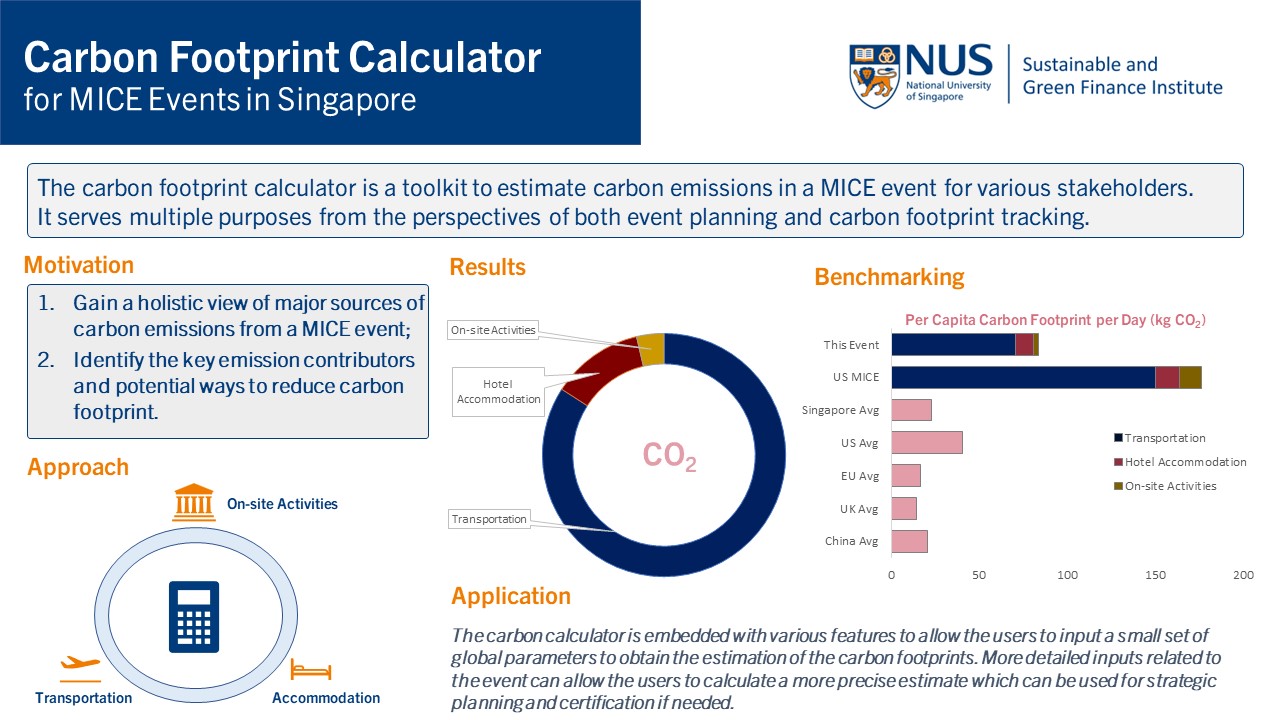
Singapore is a hub for ASEAN and international meetings, incentives, conventions and exhibitions (MICE). In 2019, the MICE industry supported more than 34,000 direct and indirect jobs with a value-add of almost SG$4 billion, close to 1% of Singapore’s gross domestic product (GDP). The pro-business environment and its strategic location have made Singapore a favourable choice for holding MICE events.

Climate change has made sustainability a critical consideration for large-scale gathering events. By actively tracking and estimating the carbon footprint incurred in various components of these events, organisers and participants gain a holistic understanding of carbon emissions. Consequently, event stakeholders attempt to address the imperative call for reducing carbon emissions by targeting key sources of emission based on their relative weighting and exploring viable solutions to a greener MICE environment.

In 2022, the Singapore Tourism Board (STB) established a vision to be among the most sustainable MICE destinations in Asia-Pacific by 2030 or earlier. A MICE Sustainability Roadmap was established which set specific targets regarding sustainability certification for MICE venues and tracking waste and carbon emissions in Singapore.

To estimate carbon dioxide (CO2) emissions involved in different components of a MICE event, this calculator identifies critical sources of CO2 emissions spanning Transportation, Hotel Accommodation and On-site Activities.

COP28_MCC

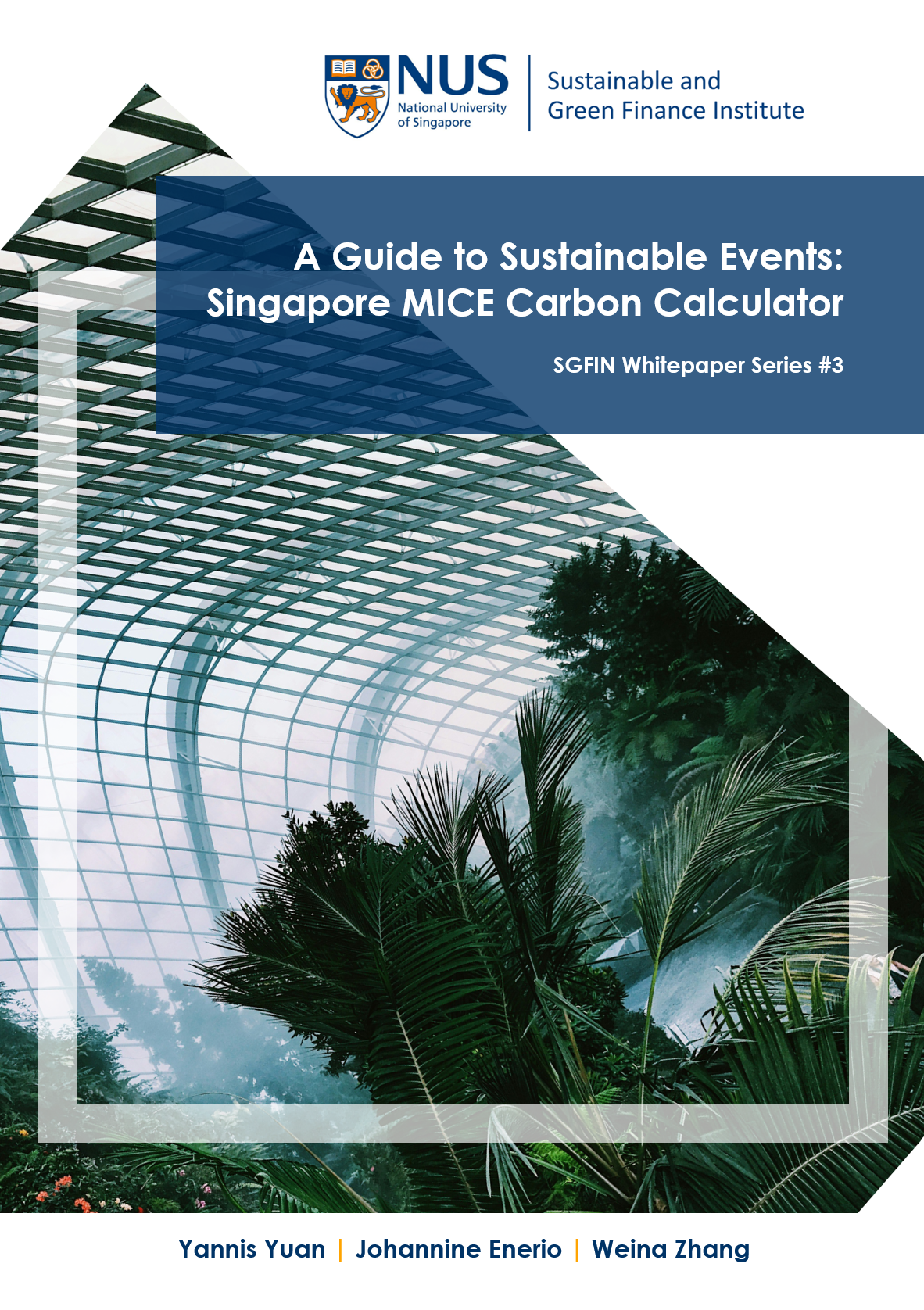
Read our whitepaper below:

NUS Green Bonds: Integrated Valuation of SDE4
Weina Zhang, Giovanni Cossu, and Jefferson
22 January 2026, IVEY Publisher, Accepted

The SDE4 is the first new-build net-zero energy building in Singapore and the National University of Singapore’s (NUS) flagship sustainability project. The building demonstrated that net-zero performance is achievable in a dense, tropical climate. Beyond energy neutrality, SDE4 integrates passive design, hybrid cooling, extensive solar panel arrays, and rainwater harvesting, while prioritising occupant health and wellbeing. NUS further positioned the building as a living laboratory, embedding research, teaching, and industry engagement into its daily operation. Notably, SDE4 demonstrates how green buildings can generate broader environmental and social value, ranging from reduced embodied carbon and water use to health benefits and knowledge sharing, beyond direct cost savings. The case will enable students to understand and compute the integrated environmental and social value of SDE4.

Samsui: Social Return on Investment
Weina Zhang, Ruth S.K. Tan, Dingyan Khoo, Gerald Chee Hean Koh, Damien Wai Cheong Lam, and Dehn Wei Jie See Toh
2 August 2019, IVEY No. 9B19M080.

Samsui Supplies & Services Private Limited provided 1.8 million meals annually to long-term care facilities in Singapore through the company’s flagship project, Samsui Central Kitchen. In April 2018, the director felt that the time was right to expand the project. To gain support for scaling up Samsui’s initiatives and maximizing the social impact the company was delivering, the director needed to quantify the value generated by the company’s corporate social responsibility initiatives in a clear and simple way. Students need to: 1) evaluate the efficacy of a CSR initiative with a strategic approach that uses a firm’s capabilities to create benefits for society, add value to the business, and ensure tight links to core business values; 2) analyze the outcome of integrating inherent core competencies and ascertaining its scalability; 3) acquire skills to formulate a comprehensive CSR framework that aligns well with both the external market trends and the fundamental values of the organization; and 4) build an SROI model to evaluate the effectiveness of CSR efforts.

FoodXervices and Food Bank: A Call for Integration
Weina Zhang, Ruth S.K. Tan, Ye Bin Han, Tian Ning Hoo, Jia Ning Vivien Ng and Chuan Ming Tan
18 July 2019, IVEY No. 9B19M067

In 2012, the founders of food wholesale company FoodXervices Inc. Pte. Ltd. identified a gap between food wastage and food insecurity in Singapore. To reduce this gap, they established a charity arm, The Food Bank Singapore Ltd., which operated as a liaison, collecting near-to-expiry, excess, and unwanted food products from food suppliers, retailers, and restaurants for distribution to beneficiary organizations. In April 2018, the founders were considering integrating these two now-mature entities to take advantage of potential internal and external synergies. Students will help to: 1) identify the possible benefits and costs of integrating a for-profit company with an independent non-profit organization; 2) outline possible ways of integrating two independent entities without jeopardizing the interests of relevant stakeholders; and 3) use a logic model to evaluate different integration strategies, and recommend an optimum strategy.