Pillar 1
Adaptation and Resilience Initiatives
Southeast Asia faces growing climate and biodiversity threats, from rising seas and extreme weather to ecosystem loss. SGFIN’s Adaptation and Resilience research stream helps financial institutions assess physical and transition risks, using geospatial data and sector-specific case studies. The goal is to develop financing solutions to strengthen long-term societal and commercial resilience to escalating climate and biodiversity risks.
SGFIN research on adaptive responses offers cutting-edge empirical and theoretical insights, examining economic responses to extreme events, adaptive behaviour under uncertainty, and policy mechanisms that strengthen resilience. Together, these studies inform evidence-based strategies to enhance adaptive capacity and reduce vulnerability in a warming world, highlighting pathways for resilient development across sectors.

US Economic Recovery after Hurricanes
Agarwal, S., Choudhury, S. P., Fan, M., Klapper, L. (2026). Real-time economic disruption and recovery from Atlantic hurricanes across the US. Nature Communications. https://doi.org/10.1038/s41467-026-78686-4
Climate projections indicate substantial increases in hurricane activity under continued warming, yet how local economies adjust to hurricanes in real time remains poorly understood. Using daily transaction data from 7,987 US ZIP codes exposed to 21 Atlantic hurricanes between 2017 and 2024, we examine aggregate merchant sales and consumer spending to quantify disruption and test for substitution across locations and channels. Hurricanes cause losses equivalent to about two days of typical sales, with limited offsetting substitution and recovery to pre-hurricane levels within ten days. Economic disruption increases with physical damage, evacuation restrictions, and infrastructure outages, while storm category alone is a poor predictor of short-run economic impacts. Disruption and recovery patterns also vary across industries, merchant types, and sales channels. These findings provide real-time evidence on how local economies adjust to hurricanes and help identify the conditions under which short-run economic disruption is most severe.
Related research news article: Hurricanes Cost Local Economies Two Days of Sales but Recover Within Ten Days
Air Pollution & Online Consumption
Agarwal, S., Wang, L., & Yang, Y. (2026). Online consumption and sustained air pollution exposure: Evidence from a quasi-experiment in China. Regional Science and Urban Economics, 121 (104267). https://doi.org/10.1016/j.regsciurbeco.2026.104267
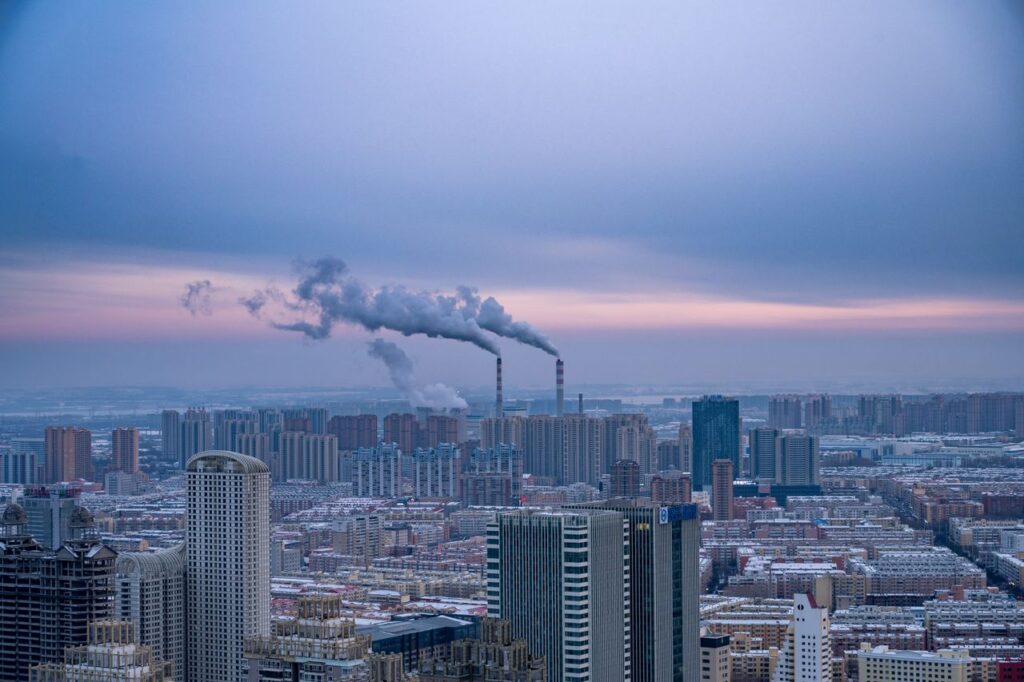
This study examines how air pollution affects household consumption in the digital economy. Using a proprietary dataset constructed from more than 500 million online transactions across 291 Chinese cities from 2017 to 2019, we study how online spending changes when pollution rises. To identify causal effects, we exploit quasi-exogenous variation in air quality generated by China’s winter heating policy and implement a difference-in-differences design comparing northern and southern cities around the heating period. We find that pollution increases online spending on health-related products and necessities and reduces spending on non-essential goods. The response is concentrated in the heating period itself, with little evidence of stockpiling before or delayed adjustment afterward. Item-level evidence shows that the increase in spending operates mainly through higher quantities purchased rather than higher payment per item. Additional evidence from Baidu search activity suggests that the spending response is associated with greater attention to pollution risks and protective products, as well as worse mood.
Singapore Water Budget
Lin Xu, Y., Meili, N., Chen, M., Ren, J., Mahto, S. S., & Galelli, S., et al. (2026). Singapore water budget: The past, the present, and the future. Water Resources Research, 62, e2025WR041411. https://doi.org/10.1029/2025WR041411
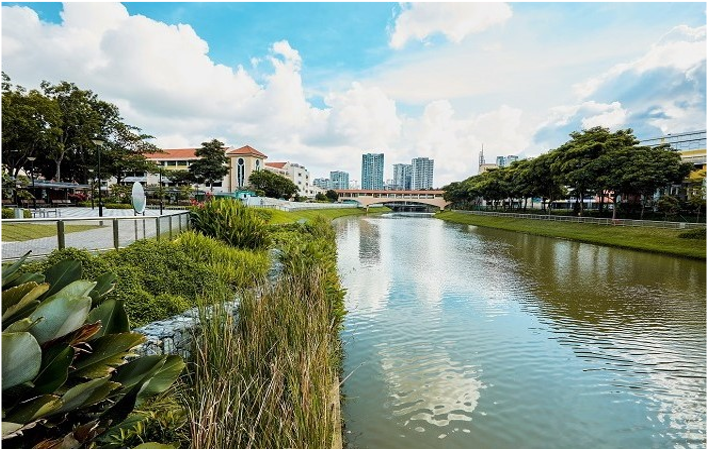
Urbanization and climate change profoundly impact hydrological processes and the associated water budget, challenging sustainable water management. In this study, we use a distributed mechanistic ecohydrological model adapted for urban environments to quantify changes in the hydrological budget components in response to urbanization, as well as projected future climate conditions and additional land cover changes. The city of Singapore is selected as the study site, given the high complexity of its water management system that integrates elements highly relevant to similar tropical urban settings, where the presented framework can be applicable. Results reveal that, compared to a pristine landscape in Singapore, urbanization has increased sensible heat flux by ∼5% and decreased latent heat flux by ∼11%. This is accompanied by a ∼32% reduction in total transpiration and a ∼16% increase in runoff. Climate change scenarios with higher temperature and elevated atmospheric CO2 levels show minimal impact on total evapotranspiration; therefore, runoff is very much dependent on the potential changes in future precipitation. Notably, the response of vegetation is shown to be relevant for long-term urban hydrology, with higher CO2 concentrations projected in the future significantly reducing the simulated stomatal conductance, which results in decreased transpiration rates broadly compensated by increased evaporation. By quantifying how urbanization and climate change can jointly impact hydrological budget components, this study demonstrates the significance of urban ecohydrology for a proper assessment of water resources, which is highly relevant to Water Sensitive Urban Design, in Singapore as well other cities.
A Multi-Provider Assessment of Asset-Level Flood Risk in the Banking Sector
2026
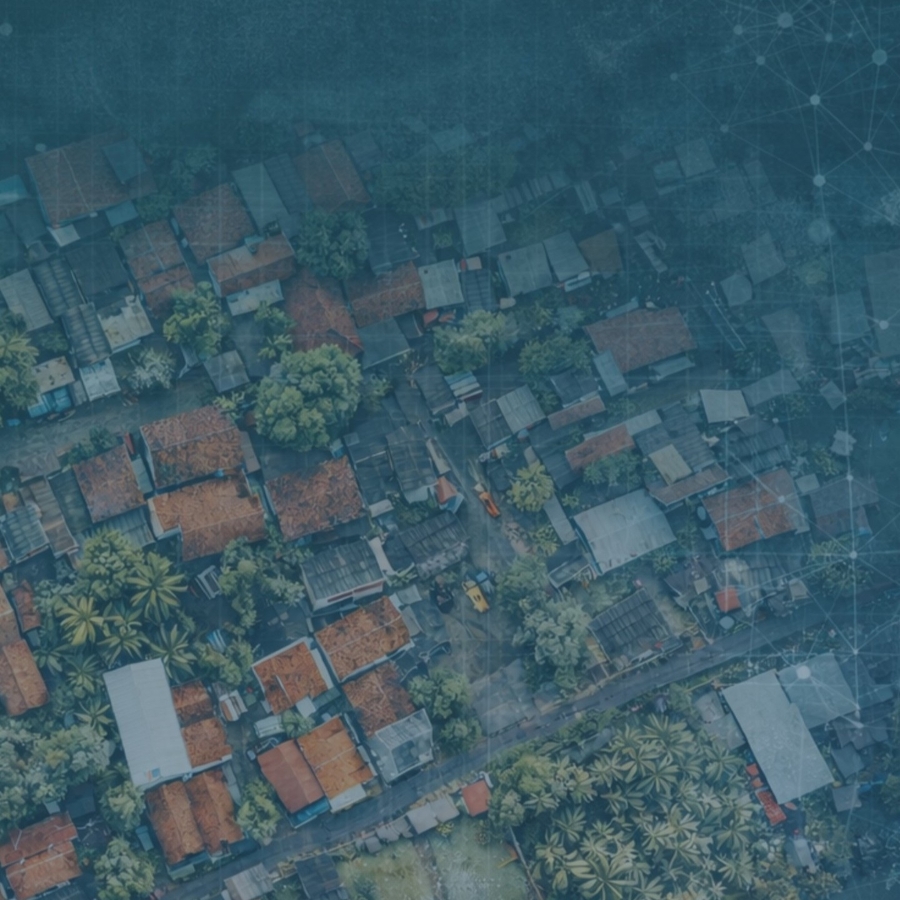
This study links large-corporate loan exposures to georeferenced assets and compares inland flood hazards across three providers. The findings show that asset-level analysis uncovers concentrated losses hidden by borrower averages, especially in capital-intensive sectors. Provider divergence is material, with no single dataset capturing half of pooled tail risk. The framework makes physical climate-risk uncertainty visible, comparable, and actionable for credit assessment, stress testing, and supervision.
Transition and Physical Climate Risks in Bank Loan Portfolios Across the Indonesian Banking System
2026
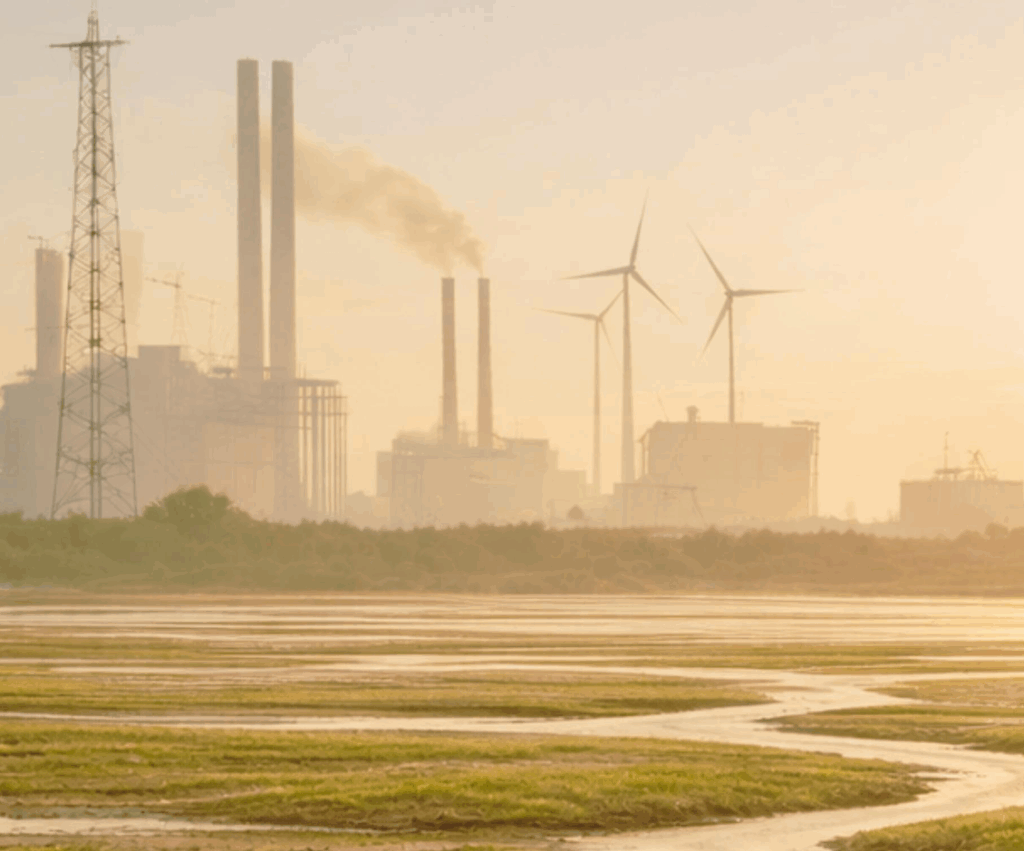
As physical risks from climate change escalate globally, financial systems face mounting climate-related vulnerabilities. Indonesia’s banking sector also faces compounding exposure. The country’s low-lying coastal geography and fossil fuel-dependent economy create dual vulnerabilities, both transitional and physical. Transition stress testing reveals that coal, oil, gas, and electricity sector borrowers face disproportionately higher default risks during volatile periods, with expected losses potentially rising 35%. Flooding poses particularly severe physical risks, threatening borrower asset values significantly. By 2060, major banks could face annual asset losses averaging 0.4% under moderate climate scenarios, and rising over 60% under severe projections. Stronger provisioning, improved capital planning, and enhanced climate risk monitoring frameworks are urgently needed.
Farming Practices, Financing Constraints, and Trust Barriers in Indonesia’s Rice Sector
2026
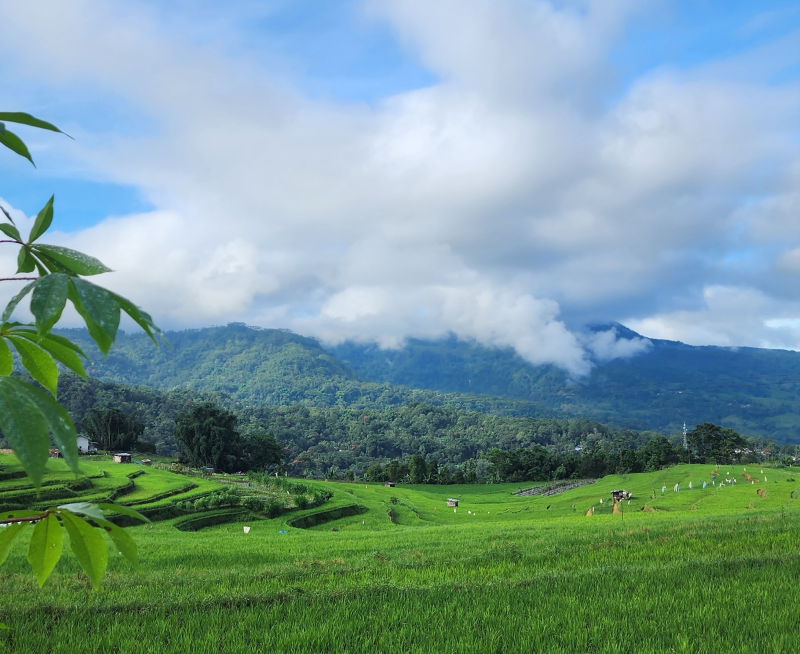
This paper provides a detailed examination of the financial vulnerabilities faced by smallholder rice farmers in Indonesia. This paper presents findings from a large-scale survey of 3,030 rice-farming households, highlighting the underlying barriers to productivity, financial inclusion, and climate resilience.