Pillar 1
Adaptation and Resilience Initiatives
Southeast Asia faces growing climate and biodiversity threats, from rising seas and extreme weather to ecosystem loss. SGFIN’s Adaptation and Resilience research stream helps financial institutions assess physical and transition risks, using geospatial data and sector-specific case studies. The goal is to develop financing solutions to strengthen long-term societal and commercial resilience to escalating climate and biodiversity risks.
SGFIN research on adaptive responses offers cutting-edge empirical and theoretical insights, examining economic responses to extreme events, adaptive behaviour under uncertainty, and policy mechanisms that strengthen resilience. Together, these studies inform evidence-based strategies to enhance adaptive capacity and reduce vulnerability in a warming world, highlighting pathways for resilient development across sectors.
Atlantic Hurricanes & Business Activity
Agarwal, S., Choudhury, S. P., Fan, M., & Klapper, L. (2025). The impact of Atlantic hurricanes on business activity (Policy Research Working Paper Series 11217). The World Bank. https://openknowledge.worldbank.org/server/api/core/bitstreams/4a51f770-b6bc-4426-a0a1-1b4d814b551c/content
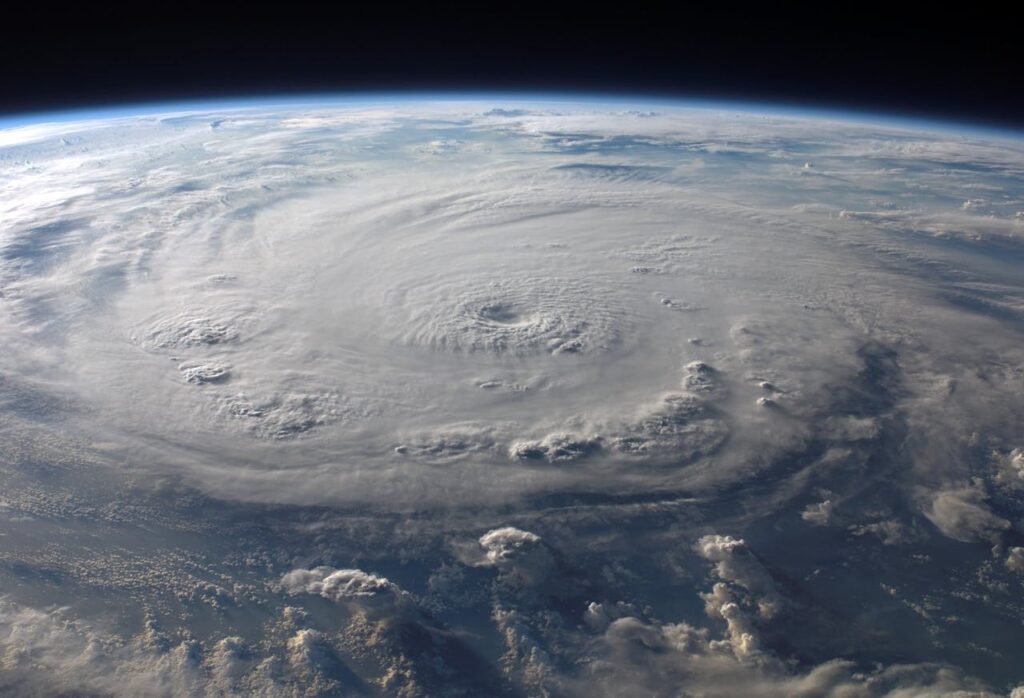
This paper quantifies the short-run economic impact of 21 Atlantic hurricanes on U.S. local business activity from 2017 to 2024 using anonymized Mastercard transaction data aggregated by ZIP code. On average, hurricanes reduce merchant sales by 12.4 percent during the preparation, impact, and recovery phases—an estimated US$1.38 billion in lost revenue per storm. Substitution in spending across nearby areas or large online platforms is limited, indicating widespread local consumption declines. Economic disruption varies more by industry than storm intensity, with independent stores hit harder than chains. Local businesses with larger online presence face smaller, shorter sales declines, showing greater resilience.

Urban Development & Climate Risk
Agarwal S., Fan, M., & Qin, Y. (2025). Avoid urban development policy that fuels climate risk, Nature Climate Change. https://doi.org/10.1038/s41558-025-02365-3
Urban development policies, designed to improve city resilience, could unintentionally increase the exposure to climate risk. This Comment discusses the impact of misaligned incentives, miscalculated benefits and costs, and overlooked behavioural responses on policy outcomes, as well as future directions.

Noise Pollution & Youth Development
Adbi, A., Agarwal, S., & Ghosh, P. (2025). Urban noise pollution and learning in developing economies, Nature Cities 2, 6-7. https://doi.org/10.1038/s44284-024-00189-4
Many cities in the developing world are witnessing high noise pollution due to infrastructure development and growing traffic. Urban planning interventions may be necessary to mitigate potential adverse effect of noise pollution on the learning outcomes of young residents in developing economies.
Sea Level Rise & Housing Prices
Agarwal, S., Qin, Y., Sing, T. F., & Zhan, C. (2025) Sea level rise risks, adaptation strategies, and real estate prices in Singapore. Journal of Public Economics, 241 (105290), https://doi.org/10.1016/j.jpubeco.2024.105290
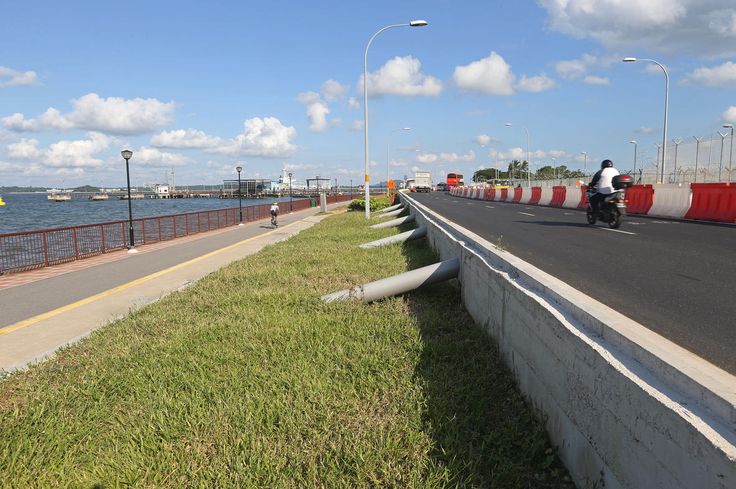
This study exploits the Singapore Prime Minister’s announcement of the areas affected by sea level rise (SLR) within the country and its adaptation strategies valued at 100 billion Singapore dollars. Utilizing transaction-level data with exact locations, we find that public housing prices dropped by 7.2% in SLR areas four years after the announcement relative to non-SLR areas. In SLR areas with adaptation, the price depreciation was mitigated to 0.6%. In the private housing sector, freehold properties benefit more from adaptation strategies than leasehold properties. We calibrate the long-term discount rates before and after the shock at 2.27% and 2.14% in SLR areas and 2.35% and 2.12% in SLR areas with adaptation, respectively. (JEL H43, R21, R28, R38, R51, Q54)
Household Income & Consumption after Flood
Agarwal, S., Ghosh, P., & Zheng, H.(2024). Consumption response to a natural disaster: Evidence of price and income shocks from Chennai flood, Energy Economics, 131 (107323), https://doi.org/10.1016/j.eneco.2024.107323
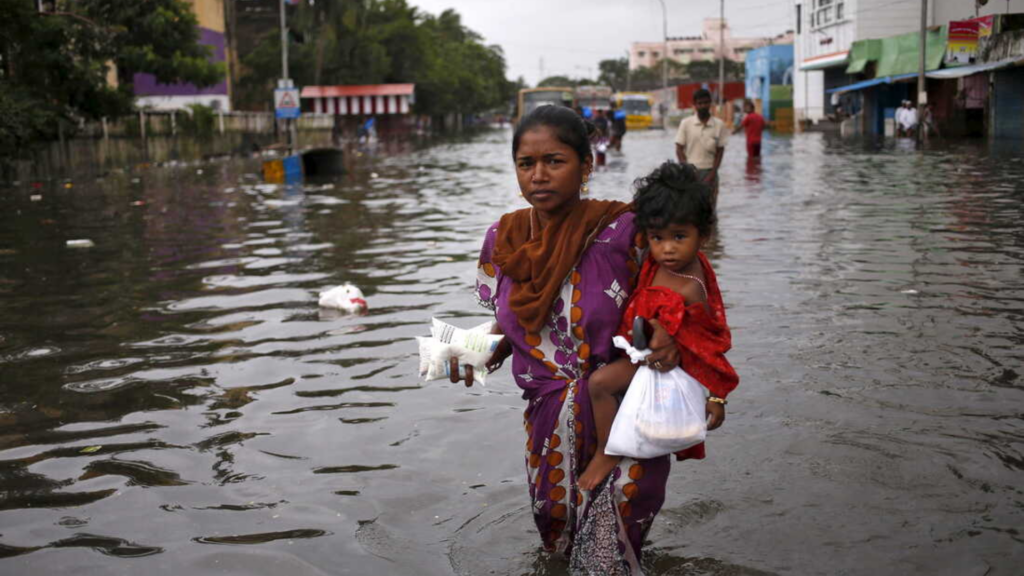
In this paper, we utilize monthly individual-level financial data and item-level supermarket sales data to study how consumption responds to one of the costliest natural disasters in India. We find that consumption dropped by 11% during the disaster, 65% of which was recovered after the disaster. On average, consumption per capita dropped by $312 per year, which costs about 5% of the GDP. We also show that natural disasters depressed consumption through income shocks instead of price shocks. Consumers smooth consumption using credit card, banks loans and wealth in coping with the shocks.

Personal Well-Being & Corporate Decisions
Liu, C., Shu, T., Sulaeman, J., Shu, T., & Yeung, P. (2023) Life is too short? Bereaved managers and investment decisions”, Review of Finance, 27,4 ,1373-1421, https://doi.org/10.1093/rof/rfac067
We study how the loss of a family member affects the investment decisions of managers in large organizations. We discovered that when managers experience the death of a loved one, they tend to take fewer risks in making investment decisions. This was observed in both mutual funds and publicly traded companies. In the case of mutual funds managed by bereaved individuals, we noticed that they displayed smaller tracking errors, had lower active share measures, and allocated more of their portfolios to larger stocks after experiencing a bereavement event. Similarly, firms led by bereaved CEOs reduced their capital expenditures and made fewer acquisitions following such events. Our analysis indicates that these changes in behavior can be attributed to emotional factors rather than other explanations (e.g., attention distraction). The risk-averse decisions made by bereaved managers have negative consequences on the performance of the funds and companies they oversee.
- « Previous
- 1
- 2
- 3
- Next »