Pillar 3
Corporate Sustainability Strategy
SGFIN’s third pillar focuses on guiding firms toward sustainability strategies that are both economically viable and socially responsible. It develops decision frameworks, assesses supply chain impacts, and builds tools to enhance transparency in corporate and SME sustainability performance, while also analysing consumer behaviour and financial market responses to help firms align with evolving standards and drive meaningful change.
SGFIN research on corporate sustainability strategy delves into how firms embed sustainability considerations into strategy, governance and financial decision-making. It spans environmental and climate-related investments, organisational and managerial incentives, and the strategic implications of sustainability commitments, providing evidence on how corporate actions shape performance, risk management and long-term value creation in a changing economic and regulatory landscape.
Sustainability Integrated Valuation Toolkit for SMEs
2026
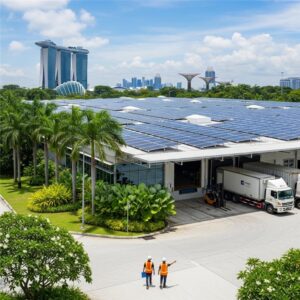
We present a simple toolkit for sustainability reporting and integrated valuation tailored to Small and Medium Enterprises (SMEs) in Singapore. The toolkit utilises the causality models that map the sustainability-related operational activities to the direct effect on company’s financial statements (“financial value”) and externalities generated (“impact value”). By systematising sustainability disclosure and impact assessment, our toolkit supports SMEs in progressing along the sustainability journey. The toolkit differs from some existing sustainability assessment frameworks/methods in three key respects. First, it incorporates an SME-oriented sustainability survey designed to streamline the data collection. Upon submission and verification of sustainability-related operational inputs, participating SMEs receive a simple and standardised sustainability statement. Second, it utilises a comprehensive set of financial proxies from the literature, government websites, well-established industry databases, and industry research to establish evidence-based linkages between operational activities and measurable impacts. Third, the integrated value statement that incorporates both financial values and impact values of the sustainability drivers can provide managerial insights for SMEs to make better decisions in sustainability initiatives.

Understanding Net Zero Commitments by Singaporean Firms
2026
As Singapore advances toward its national goal of net zero emissions by 2050, understanding how listed companies in Singapore are responding is critical for investors, policymakers, and businesses alike. This whitepaper provides a comprehensive, evidence-based assessment of net zero commitments made by Singapore-headquartered listed firms, based on detailed manual screening of annual and sustainability reports.
Rethinking Value Creation in Building Sustainable and Regenerative Cities
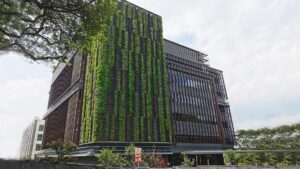
Zhang, W., Or, F., Zhang, F., & Jefferson. (2025). Rethinking value creation in building sustainable and regenerative cities. Urban Solutions, 27, Centre for Liveable Cities. https://isomer-user-content.by.gov.sg/50/4219c964-8255-4fd4-8ffa-c0c2340285f8/Issue27%20-%20Essay_Cross-System%20Relationships_Weina%20Zhang.pdf

ETS Heterogeneity & Decarbonization Outcomes
Adbi, A., Agarwal, S., & Natarajan, S. (2025). Global heterogeneity in ETS rollouts and subsequent decarbonization outcomes. Energy Economics, 132, 108921. https://doi.org/10.1016/j.eneco.2025.108921
This study explores how emissions trading schemes (ETSs) worldwide influence decarbonization. It finds that while ETSs can reduce carbon intensity, emissions, and boost renewable energy adoption, their effectiveness varies across countries. Key factors include reliance on natural resource rents, economic development level, and whether ETSs are nationwide or partial. The research shows that higher ETS carbon prices strengthen emissions reductions, underscoring both the potential and limits of ETSs in driving global climate action.

Sustainable Business in Biofuels
2025
This whitepaper aims to support the efforts towards scaling and commercialising the biofuels in a more financially and environmentally sustainable manner, equipping stakeholders in the biofuel industry with the knowledge on key gaps and opportunities within biofuels’ business models, financing, and policy landscapes.

Consumption Carbon Footprint: Country Level Data Framework
2025
This whitepaper presents a country-agnostic algorithm for estimating household and individual carbon footprints based on personal consumption baskets.