Building Singapore’s Sustainable Future: Insights, Action and Resilience
9 Sept 2026
On 9 September 2026, SGFIN launched its new whitepaper, "Closing the Sustainability Action Gap: Insights from the Singlife-SGFIN Sustainable Future Index 2026", in collaboration with Singlife. The event was also part of the series of activities under NUS Sustainability Connect.
Based on a survey of 1,500 Singaporeans and permanent residents, the Sustainable Future Index (SFI) examines sustainability behaviour across four pillars: Responsible Investing, Acting on Climate Change, Inclusive & Sustainable Solutions, and Society & Culture.
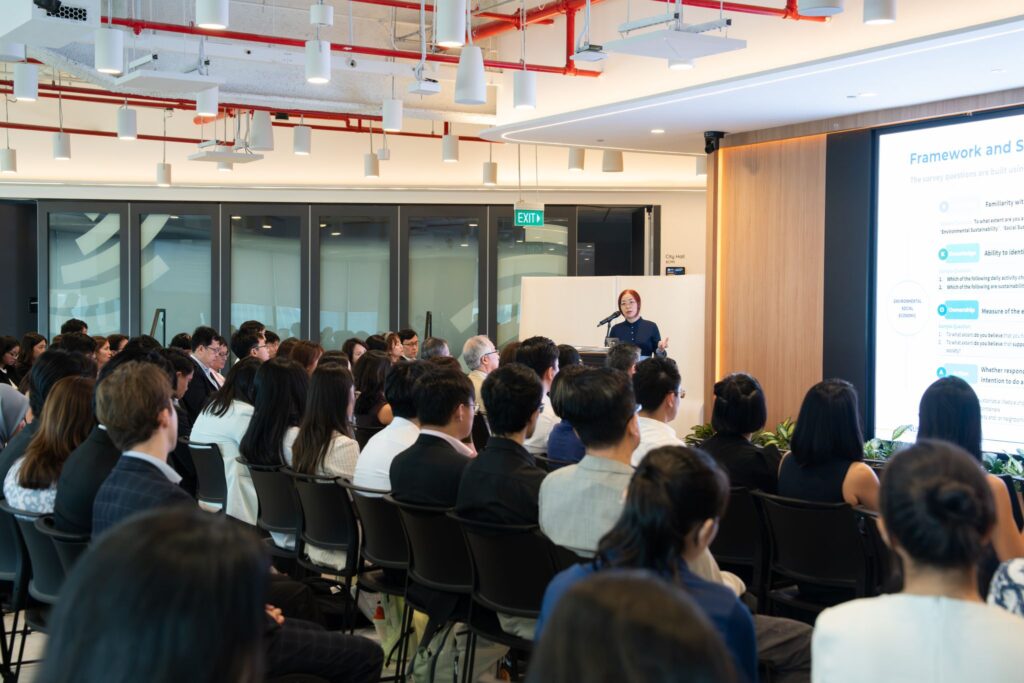
At the launch, Associate Professor Zhang Weina, Deputy Director of SGFIN, presented key insights from the study. What sets this research apart is that it goes beyond measuring sustainability actions and intentions to examine what motivates people to act, using the academically grounded Awareness–Knowledge–Ownership–Action (AKOA) framework. The study’s key findings include:
- Ownership, or the extent to which sustainability matters personally, is the strongest driver of action.
- Cost and convenience matter: lower-cost, more convenient actions tend to see higher adoption, while costlier actions face greater barriers.
- Gen Z emerges as a priority demographic, showing strong intentions to act across the four action pillars and significant potential to translate those intentions into adoption.
These insights have implications for individuals and communities, businesses, financial institutions, and policymakers seeking to close the action gap.
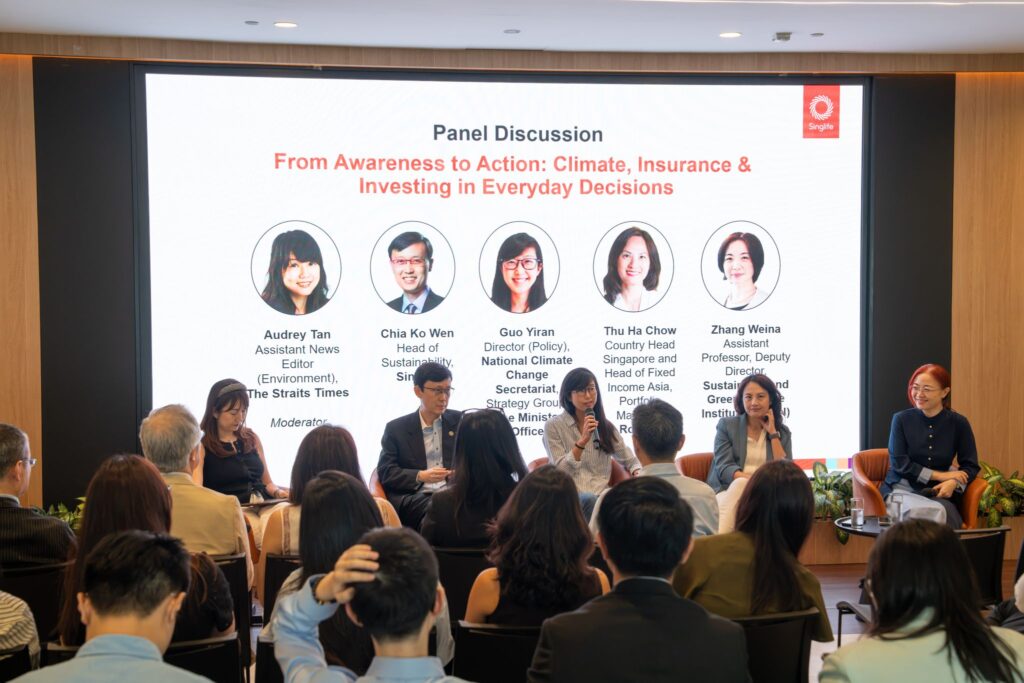
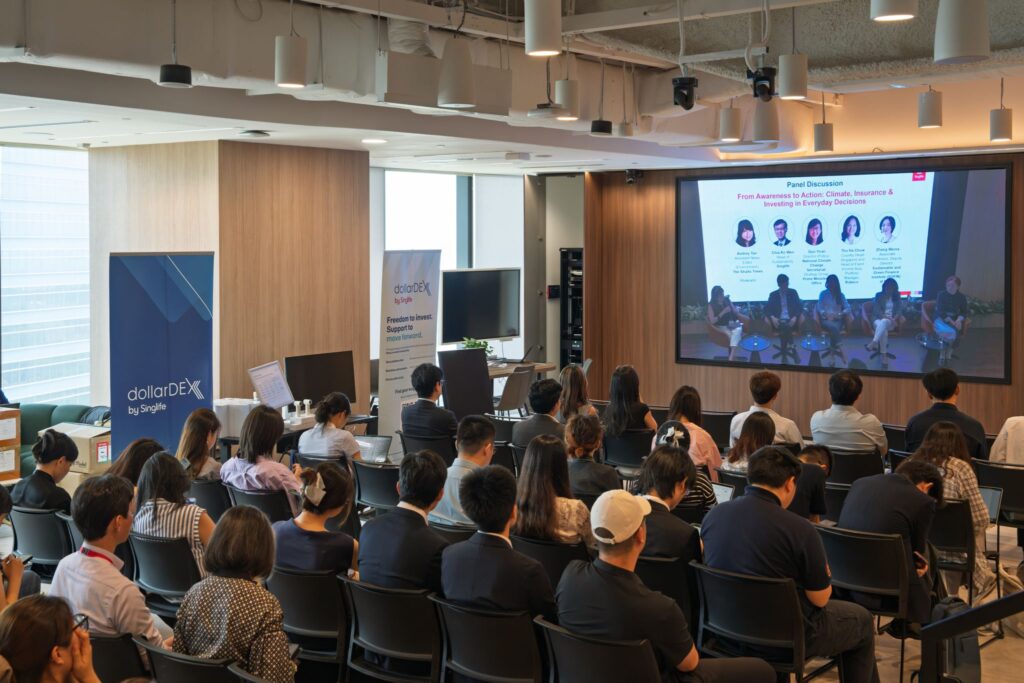
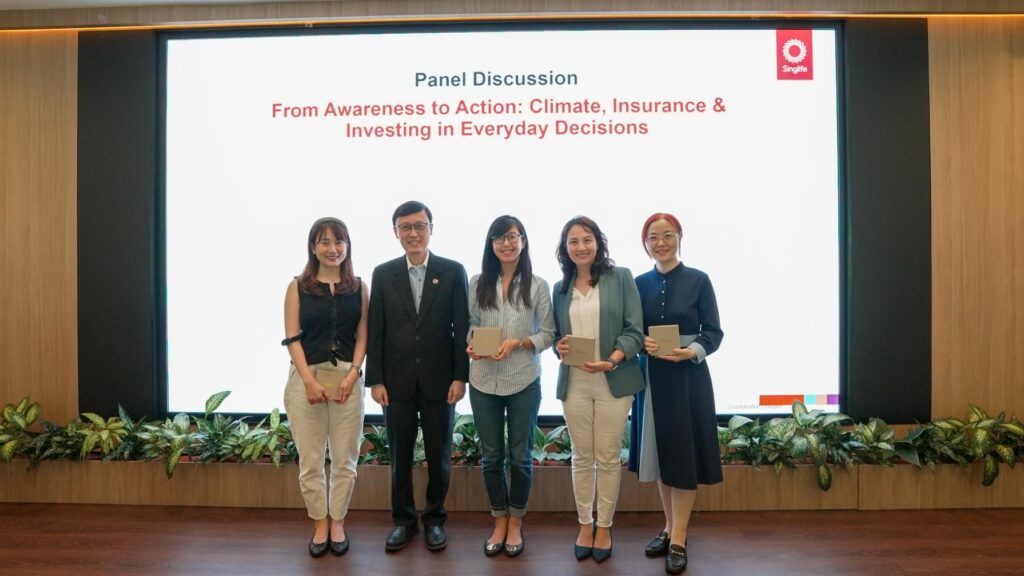
Following the presentation, a panel discussion moderated by Audrey Tan (The Straits Times) brought together KW Chia (Singlife), Yiran Guo (National Climate Change Secretariat, Singapore), Thu Ha Chow (Robeco) and Prof Weina. The discussion explored why younger Singaporeans show stronger intentions but lower levels of action, including differences in their capacity to act; how framing climate risks in terms of health, finances and wellbeing could encourage practical adaptation and protection; and what needs to change to close the intention–action gap. Panellists highlighted levers ranging from individual mindsets and experiential learning to greater ownership by financial institutions in building resilient, sustainable businesses.
The audience of Q&A extended the conversation to corporate strategic decision-making, AI adoption, high-quality sustainability data and impact metrics that can strengthen corporate action and investors’ confidence in their sustainable investment decisions.
The whitepaper is available on our website here.
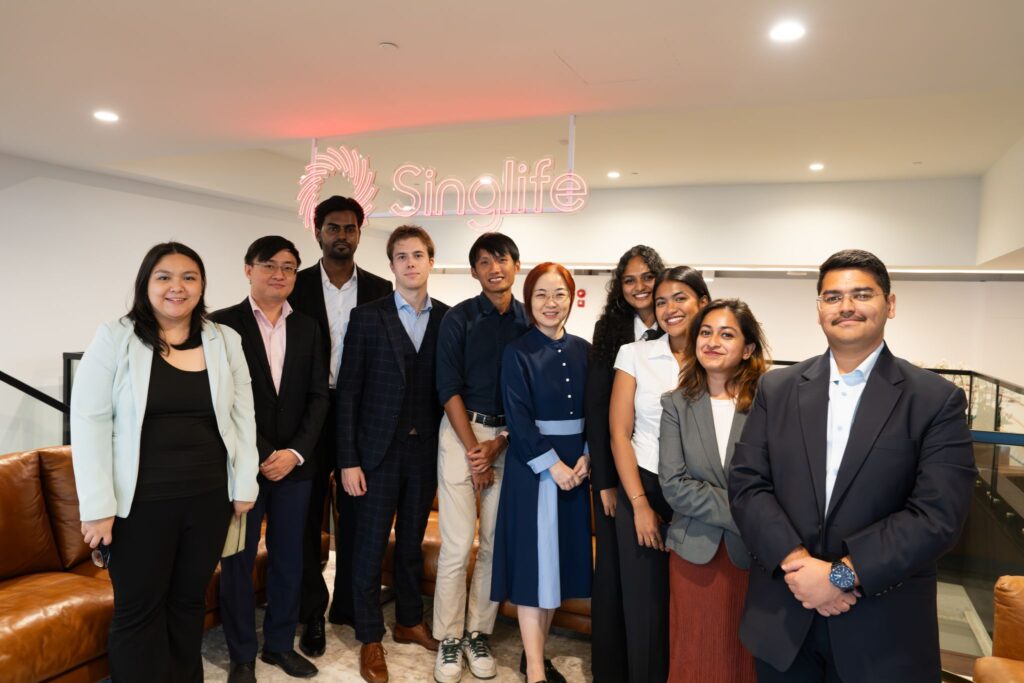
We thank Singlife, our speakers, panellists, MSc in SGF students and everyone who supported the development and launch of this paper. The institute looks forward to continued dialogue among financial institutions, corporates, and policymakers to advance sustainability action.