Pillar 1
Adaptation and Resilience Initiatives
Southeast Asia faces growing climate and biodiversity threats, from rising seas and extreme weather to ecosystem loss. SGFIN’s Adaptation and Resilience research stream helps financial institutions assess physical and transition risks, using geospatial data and sector-specific case studies. The goal is to develop financing solutions to strengthen long-term societal and commercial resilience to escalating climate and biodiversity risks.
SGFIN research on adaptive responses offers cutting-edge empirical and theoretical insights, examining economic responses to extreme events, adaptive behaviour under uncertainty, and policy mechanisms that strengthen resilience. Together, these studies inform evidence-based strategies to enhance adaptive capacity and reduce vulnerability in a warming world, highlighting pathways for resilient development across sectors.
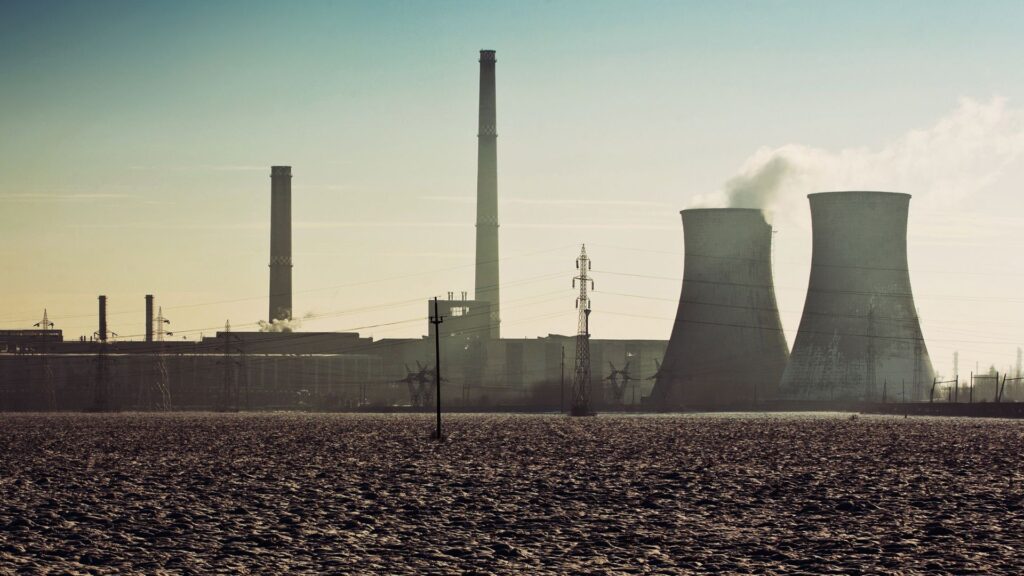
Hidden Night-Time Industrial Pollution
Agarwal, S., Han, Y., Qin, Y., & Zhu, H., (2023). Disguised pollution: industrial activities in the dark. Journal of Public Economics, 223(104904), https://doi.org/10.1016/j.jpubeco.2023.104904
In this paper, we show that some Chinese firms, under the cover of darkness, emit increased amounts of sulfur dioxide (SO2). Using hourly pollution data from 1,583 national monitoring stations in China from January 2015 to December 2017, we found a significant increase in industrial toxin SO2 levels after sunset in highly industrialized areas. This insight enhances our understanding of industrial firms’ pollution practices. While these monitoring stations are strategically placed in heavily polluted industrial regions, nearby firms engage in covert pollution activities, taking advantage of the lack of direct government oversight, especially during nighttime hours. Our findings highlight the necessity for a more comprehensive environmental monitoring system, encompassing both daytime and nighttime operations and their associated toxic emissions. This system should extend its coverage beyond large corporations to include smaller firms in industrialized areas.
Water Pricing & Consumption
Agarwal, S., Araral, E., Fan, M. , Yu, Q., & Zheng, H. (2023) The effects of policy announcement, prices and subsidies on water consumption. Nat Water, 1, 176–186. https://doi.org/10.1038/s44221-023-00028-1
In our research, we investigate how alterations in water prices and subsidies influence water conservation in Singapore. Analyzing a decade of monthly billing data for 2.2 million residential accounts, we discovered that simply announcing a water price increase led to a 3.7% reduction in consumption, more impactful than the actual 30% price hike. Consumers who were more conscious of price changes responded more to the announcement, while those with higher water usage were more influenced by the actual price increase. Moreover, our research emphasizes that only through calibrated information provision and program design can we alleviate the financial burden on lower-income households’ water consumption while maintaining the positive water conservation effects resulting from a price increase. In summary, our results suggest that the traditional market-based policy instruments, such as price and subsidy, could be combined with “information salience” to achieve sustainable outcomes efficiently with minimal technology advancement cost.
- « Previous
- 1
- 2
- 3